Showing posts with label fish. Show all posts

Monday, June 10, 2013

Living fossils can evolve quickly

ResearchBlogging.orgThe evolution of living fossils is not unusual. The odd thing about them is that they have ancient origins and are, today, not very diverse groups. Sturgeon are ray-finned fishes in the family Acipenseridae, which are known from almost 200 million year old fossils. Fossils that are recognisably similar to modern sturgeons appear about 100 million years ago. There are 23 (but maybe a few more) modern species in the Acipenseridae, which is probably fairly similar to their historical diversity.


A sturgeon in the genus Acipenser, possibly A. transmontanus (image Wikipedia).
Other families of fish are much more diverse than the Acipenseridae. Some of the most beautiful marine fish are in the families Gobiidae (gobies) and Labridae (wrasses), with over 2,000 and 600 species respectively. And they aren't even the largest families of fish. That honour probably goes to the Cyprinidae (carps and minnows) with over 2,400 species. This pattern raises an interesting question; why are some groups highly diverse while others are not?


The old glory goby, Amblygobius rainfordi (top), the Yellowtail coris wrasse, Coris gaimard, being cleaned by a cleaner wrasse, Labroides phthirophagus (middle), and the cleaning goby, Elacatinus evelynae (bottom). Notice the convergent colour evolution in the cleaner fishes (all images Wikipedia).
One hypothesis is that some groups are more 'evolvable'. These groups are able to change their morphology relatively quickly and are consequently able to form more new species. For this hypothesis to be true, we should see a correlation between the amount of phenotypic change within a group and the amount of speciation. Studies that have looked at this relationship within lineages have failed to detect it.

A new paper by Rabosky and others argues that a fairer test of the hypothesis is to look at the relationship among lineages. They constructed an enormous evolutionary tree containing almost 8,000 species from across the entire spectrum of diversity of ray-finned fishes. They used body size evolution as a proxy for phenotypic change and found overwhelming support for the hypothesis; families with greater diversity in body size typically contained a greater number of species.

One group to buck this trend were the sturgeons. The rate of change in body size in sturgeons is amongst the fastest for all fishes. The baluga, Huso huso, is one of the largest ray-finned fishes, growing to over five and a half meters and 1,000 kilograms, while the dwarf sturgeon, Pseudoscaphirhynchus hermanni, grows to just 27 cm and 50 grams. This considerable difference in body size has arisen almost 5.4 times more rapidly than expected and only five of the 172 families in the analysis diverged faster.

These results are in complete contrast to the popular conception of living fossils as slow changing evolutionary oddballs. Indeed, in this analysis sturgeon are outliers because of the speed of their evolution. Clearly some traits in sturgeon are highly conserved over large periods of time, but we should not assume that this means that all of their traits are highly conserved. Living fossils are evolving and can diverge rapidly.

I've also written about living fossils here and here.

Reference
Rabosky, D., Santini, F., Eastman, J., Smith, S., Sidlauskas, B., Chang, J., & Alfaro, M. (2013). Rates of speciation and morphological evolution are correlated across the largest vertebrate radiation Nature Communications, 4 DOI: 10.1038/ncomms2958

Saturday, April 27, 2013

Cooperative hunting between species

Cooperative hunting among individuals of the same species is common. But, cooperative hunting between different species is incredibly rare. Ed Yong has an interesting story on cooperative hunting between moray eels and grouper. Although this behaviour was first documented in 2006, there is a new study that describes a previously undocumented behaviour that the grouper uses to recruit its hunting partners.

Thursday, March 28, 2013

Are there really plenty of fish in the sea?

ResearchBlogging.orgWe started trying to manage fisheries using science-based principles more than 150 years ago. Today, despite great improvements, we are still struggling to manage fisheries well. Perhaps the greatest missing piece in our understanding is an ability to accurately link the number of spawning adult fish with the number of their offspring that survive to replenish the population. Recognition that individual differences play a role in the dynamics of natural populations promises to greatly improve fisheries management.

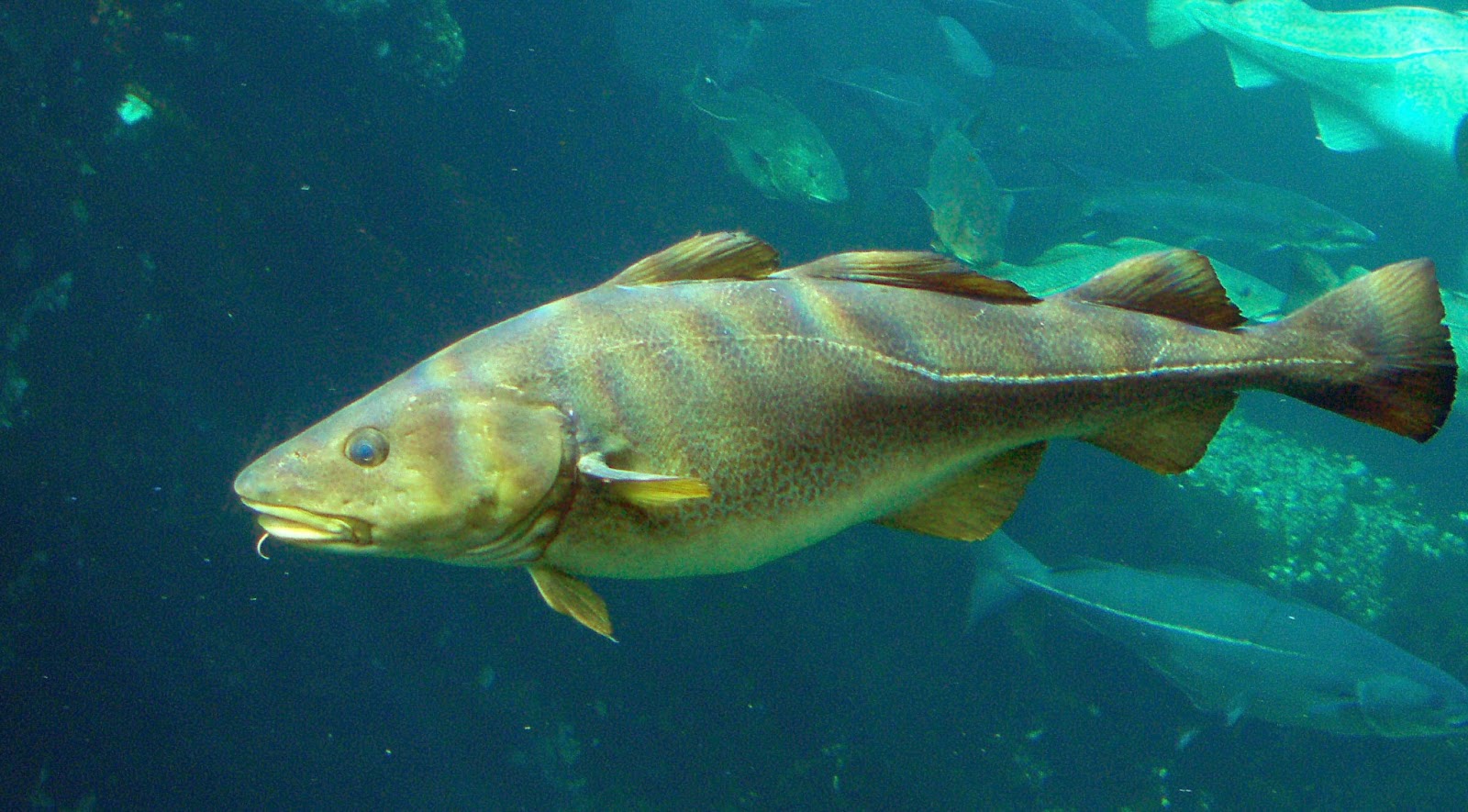
A classic example of our inability to effectively manage harvested fish populations is the collapse of the northwest Atlantic cod fishery. Despite being managed using best practices, in 1992 the number of cod had collapsed to less than 1% of the number present in 1977. A moratorium was declared to allow the fishery to recover. It was predicted to rebound within a decade, but twenty years on and cod stocks are still at less than 5% of their previous levels and some authorities suggest the fishery may never fully recover.


An Atlantic cod, Gadus morhua (photo Wikipedia).
Most fishes are highly fecund, releasing tens to hundreds of thousands or even millions of eggs. Mortality during the early life of fish is incredibly high, often with fewer than one in a thousand surviving the first few days. But, because of the shear number of offspring, small changes in the mortality rate can lead to enormous differences in the number of fish that survive to replenish the population. The great difficulty has been to determine which factors contribute to changes in mortality rate.

Predation and starvation are the two greatest sources of mortality for fish eggs and larvae. Neither of these is random. Bigger, better provisioned eggs are more likely to produce larvae that survive the larval period and replenish the adult population. There are also characteristics of the parents that effect the survival of their offspring, such as when and where they choose to spawn, and how big or old they are.


Predators of fish eggs and larvae are numerous. Jellyfish, like Aurelia aurita, are among them (photo Wikipedia).
Early hypotheses about what regulated survival in the larval period focused on starvation. Hjort's 'critical period' hypothesis (1914) proposed that food resources must be present when larval fish were switching from using their yolk reserves to feeding. Cushing's 'match-mismatch' hypothesis (1975, 1990) recognised that as larvae grow they need progressively larger prey and timing of prey requirement needs to be a match with the timing of prey availability.


Good evidence to support these hypotheses has only emerged recently, with the arrival of technology that can provide long-term measurements over large spatial scales. Platt et al. (2003) combined data from remote-sensing satellites with long-term population surveys of haddock, Melanogrammus aeglefinus. Their data showed that when the peak of spawning occurred after the peak in the spring plankton bloom, survival of larval haddock was much higher.


A haddock, Melanogrammus aeglefinus (photo Wikipedia).
Beaugrand et al. (2003) used data from continuous plankton sampling devices that are opportunistically attached to merchant ships. The devices gave them not only plankton abundance data, but allowed them to measure the size of prey species. Data on cod, Gadus morhua, were obtained from two largely overlapping population surveys. Like Platt et al., they found that the timing of the plankton bloom was important for larval survival, but they also found that the abundance and average size of prey species were important too.

Predation was recognised early on as an important factor influencing the survival of fish larvae. However, research into its effects on fish populations didn't begin in earnest until the 1970's. The research showed that bigger, faster growing larvae were more likely to survive that larval period. Several, subtly different mechanisms were proposed to explain this pattern and are often combined into the 'growth-predation' hypothesis. 

Testing the growth-predation hypothesis in the wild has proved tricky. But, fish have structures in their ears called otoliths that lay down growth rings a bit like the growth rings in a tree. Because the growth rings in otoliths are laid down daily in many fish species they can be used as proxy measurements of size and growth. Several studies have used otoliths to calculate size and growth rates and have universally supported the growth-predation hypothesis (e.g. Hare & Cowen 1997, Meekan et al. 2006).

The otolith of a black rockfish, Sebastes melanops, showing the light and dark bands of yearly growth increments. Smaller daily increments are visible under higher magnifications (photo Vanessa von Biela, USGS).
Mothers are one of the most important influences on the size and growth rate of larval fish, particularly early in life when mortality is highest. The time that mothers spawn determines the match between hatching and the availability of food resources. The amount that mothers invest in their offspring also influences their survival. Bigger eggs typically hatch into bigger larvae that grow faster and are more resistant to starvation Spawning time and investment can depend on the characteristics of mothers.

It's widely documented that larger, older mothers produce more offspring. Fecundity typically increases with the volume of the body cavity, which is roughly proportional to the cube of female length. Berkeley et al. (2004) also showed that larger, older female black rockfish, Sebastes melanops, invested more into their offspring, resulting in faster growing larvae that were more resistant to starvation. 

The blue rockfish, Sebastes mystinus, looks similar to the black rockfish (photo Wikipedia)
The Berkeley et al. paper became frequently cited to make the case that larger, older females needed better protection (e.g. Palumbi 2004, Birkeland & Dayton 2005). Harvesting large females might be much worse for the population because they produce more offspring that have a greater chance of surviving the larval period. Most fisheries remove the larger, older individuals, even when they are not targeted, which might explain why collapsed stocks struggle to recover faster than expected, like the Atlantic cod.

Marshall et al. (2010) argued that it was unjustified to conclude that larger females produce larvae that greater chance of survival. Decades of empirical and theoretical work has shown that the only time mothers should produce larger eggs is when they are releasing offspring into a poorer quality environment. Berkeley et al. tested larvae in common conditions and, therefore, they didn't expose larvae to the conditions that they would have experienced in the wild. 

Larger mothers might provide their offspring with a poorer quality environment in a number of ways. They might expose their offspring to greater competition with their siblings because they release far more larvae. Female size can predict the timing of spawning, and does in the black rockfish, which exposes larvae to different environmental conditions. Therefore, the larger offspring produced by larger mothers might have similar chances of surviving the larval period under natural conditions.

There is some evidence that the decades of theoretical and empirical work might not have captured the whole picture. If all larvae have roughly the same chance of making it through the larval period you would expect that the diversity of surviving larvae would be roughly proportional to the numbers released. Hedgecock et al (2007) estimated that in one cohort of the Pacific oyster, Ostrea edulis, only 10 - 20 individuals produced all of the surviving offspring.


Beldade et al. (2012) conducted a similar study to Hedgecock et al., but they were able to link surviving larvae with adults. They found that larger mothers contributed disproportionally more to the number of larvae that returned to the same population and that greater fecundity alone did not account for the disparity. It's not entirely compelling because it is possible that smaller mothers are producing larvae that preferentially disperse away. It is a tantalizing hint that larger, older mothers really matter more for population replenishment.

Most fisheries models currently do not account for the differences in the survival chances of larvae or the potential differences in the contribution of mothers to the next generation. They treat the survival of all larvae as equally likely, or ignore the larval period altogether. Such models are failing to produce accurate predictions of future stock numbers. Greater understanding of mortality processes in the larval period and the rise of individual based models promise to greatly improve the way fisheries are managed.

References:
Beaugrand, G., Brander, K., Alistair Lindley, J., Souissi, S., & Reid, P. (2003). Plankton effect on cod recruitment in the North Sea. Nature, 426 (6967), 661-664 DOI: 10.1038/nature02164

Beldade, R., Holbrook, S., Schmitt, R., Planes, S., Malone, D., & Bernardi, G. (2012). Larger female fish contribute disproportionately more to self-replenishment. Proceedings of the Royal Society B: Biological Sciences, 279 (1736), 2116-2121 DOI: 10.1098/rspb.2011.2433

Berkeley, S., Chapman, C., & Sogard, S. (2004). Maternal age as a determininant of larval growth and survival in a marine fish, Sebastes melanops. Ecology, 85 (5), 1258-1264 DOI: 10.1890/03-0706

Cushing, D. (1969). The Regularity of the Spawning Season of Some Fishes. ICES Journal of Marine Science, 33 (1), 81-92 DOI: 10.1093/icesjms/33.1.81  

Cushing, D. H. (1990). Plankton production and year-class strength in fish populations - an update of the match mismatch hypothesis. Advances in Marine Biology, 26, 249-293 DOI: 10.1016/S0065-2881(08)60202-3  

Hare, J., & Cowen, R. (1997). Size, Growth, Development, and Survival of the Planktonic Larvae of Pomatomus saltatrix (Pisces: Pomatomidae). Ecology, 78 (8) DOI: 10.2307/2265903

Hedgecock, D., Launey, S., Pudovkin, A., Naciri, Y., Lapègue, S., & Bonhomme, F. (2006). Small effective number of parents (N-b) inferred for a naturally spawned cohort of juvenile European flat oysters Ostrea edulis. Marine Biology, 150 (6), 1173-1182 DOI: 10.1007/s00227-006-0441-y

Hjort, J (1914). Fluctuations in the great fisheries of northern Europe viewed in the light of biological research. Reun. Cons. Int. Explor. Mer, 20, 1-228

Marshall, D., Heppell, S., Munch, S., & Warner, R. (2010). The relationship between maternal phenotype and offspring quality: Do older mothers really produce the best offspring? Ecology, 91 (10), 2862-2873 DOI: 10.1890/09-0156.1   

Meekan, M., Vigliola, L., Hansen, A., Doherty, P., Halford, A., & Carleton, J. (2006). Bigger is better: size-selective mortality throughout the life history of a fast-growing clupeid, Spratelloides gracilis. Marine Ecology Progress Series, 317, 237-244 DOI: 10.3354/meps317237

Platt, T., Fuentes-Yaco, C., & Frank, K. (2003). Spring algal bloom and larval fish survival. Nature, 423 (6938), 398-399 DOI: 10.1038/423398b

Tuesday, February 26, 2013

Fish get wasted on wastewater

ResearchBlogging.orgIn most cities sewage is treated to remove most of the things that we don't want going into the environment. But, some things get through and out to sea. The Western Treatment Plant in Melbourne, which treats over 50% of Melbourne's wastewater (including my contribution), releases large amounts of nitrogen into Port Phillip Bay. Indeed, a 1996 report from the Commonwealth Scientific and Industrial Research Organisation recommended that nitrogen released from the Western Treatment Plant be reduced by 1000 tonnes per year. Nearly 20 years later they've achieved half that amount.


The Western Treatment Plant. Covering 10,500 hectares it treats about 50% of Melbourne's wastewater.
Nitrogen pollution is significant issue. It, along with other types of nutrient pollution, has been linked to coral and seagrass declines, and jellyfish blooms. Other things that cause problems in the ocean also slip through sewage treatments plants. From the relatively large things, like plastic fibers from clothing, to the very small, like the drugs we take.


Not all drugs remain active after they've done their job in the human body, but many do. One of the best known and most researched drugs to escape sewage treatment is ethinyl oestradiol, the active ingredient in birth control pills. Decades of research has shown that ethinyl oestradiol has negative impacts on fish and other aquatic organisms. Even very small doses can lead to male fish that produce eggs in their testes, leading to reduced fertility and potentially to population collapse (Kidd et al. 2007).

Sections through the testis of two male fish showing developing eggs, which are the large circular cells surrounded by purple staining tissue. The smaller purple staining flecks are the sperm cells.
Many recreational drugs also make it through wastewater treatment, such as illicit  amphetamines (Kasprzyk-Hordern et al. 2009). To my knowledge, it has not been shown that these arrive in the environment at high enough doses to cause any negative effects. Caffeine, my favorite recreational drug, is detected in seawater at concentrations high enough to produce measurable, but probably minor effects in mussels (del Rey et al. 2011, 2012).

Exposure to the concentrations of caffeine that are normally found in the environment probably have little or no effect on fish. Unlike caffeine, some drugs can build up in the body tissues of fish, making chronic exposure to even low concentrations a risk. Recently a study found that the concentration of a common anti-anxiety medication, oxazepam, was six times higher in the muscle of redfin perch (Perca fluviatilis) than it was in the surrounding river water (Brodin et al. 2013).

A redfin perch, Perca fluviatilis, in an aquarium (photo Wikipedia)
Interestingly, Brodin et al. went on to test what effects oxazepam had on the redfin perch. Annoyingly, they used concentrations of the drug that were three times higher than they recorded in the river and higher than other studies have documented. But, their treatments produced levels of the drug in the muscle tissue of the fish that were comparable to the fish in the river, indicating their results are probably biologically relevant. They found that the fish exposed to the drug exhibited increased activity, reduced sociality, and higher feeding rate relative to control fish.

Although they scuffed their experiment a little with their choice of concentrations, they did do something that few other ecotoxicology studies do. They looked at behavioural traits that are important for the survival of fish in the wild. Too slowly are excotoxicologists moving away from testing the lethal effects of pollutants, often requiring doses that never occur in the wild. Hopefully, the publication of the Brodin et al. paper in the prestigious journal Science will encourage more researchers to examine the effects of pollutants at the levels which they typically occur and on a greater range biologically interesting traits.

References:

Kidd, K., Blanchfield, P., Mills, K., Palace, V., Evans, R., Lazorchak, J., & Flick, R. (2007). Collapse of a fish population after exposure to a synthetic estrogen Proceedings of the National Academy of Sciences, 104 (21), 8897-8901 DOI: 10.1073/pnas.0609568104  

Kasprzyk-Hordern, B., Dinsdale, R., & Guwy, A. (2009). The removal of pharmaceuticals, personal care products, endocrine disruptors and illicit drugs during wastewater treatment and its impact on the quality of receiving waters Water Research, 43 (2), 363-380 DOI: 10.1016/j.watres.2008.10.047  

Rey, Z., Granek, E., & Buckley, B. (2011). Expression of HSP70 in Mytilus californianus following exposure to caffeine Ecotoxicology, 20 (4), 855-861 DOI: 10.1007/s10646-011-0649-6  

Rodriguez del Rey, Z., Granek, E., & Sylvester, S. (2012). Occurrence and concentration of caffeine in Oregon coastal waters Marine Pollution Bulletin, 64 (7), 1417-1424 DOI: 10.1016/j.marpolbul.2012.04.015  

Brodin, T., Fick, J., Jonsson, M., & Klaminder, J. (2013). Dilute Concentrations of a Psychiatric Drug Alter Behavior of Fish from Natural Populations Science, 339 (6121), 814-815 DOI: 10.1126/science.1226850

Monday, January 7, 2013

Waterfall climbing fish

ResearchBlogging.orgDiadromous fish are those that live part of their lives at sea and part of their lives if freshwater. Some of these fish reproduce in the upper parts of rivers above barriers like waterfalls, which they must scale in order to make it to the breeding sites. A newly published paper looks at how the Nopili goby, Sicyopterus stimpsoni, manages to climb waterfalls. The researchers found that the way the goby feeds and the way it climbs are very similar.

The Nopili goby, Sicyopterus stimpsoni (photo Takashi Maie)
During feeding the Nopili goby extends its upper jaw out much further and its lower jaw much less than other gobies. In climbing the basic motion is the same except the upper jaw maintains closer contact with the rock. Climbing is also assisted by pelvic fins fused into a sucker, a feature of all gobies. Because no other goby feeds in the same way, it's unclear whether the feeding or climbing movements evolved first.

The climbing galaxias, Galaxias brevipinnis (photo Robert McCormack)
There are many other fish that have a diadromous life-history, eels and salmon being the classic examples. There are fewer fish that climb waterfalls. However, in southern Australia and New Zealand there is a fish close to my heart that has a very similar life-history to the Nopili goby, but it climbs waterfalls in a different way. The climbing galaxias, Galaxias brevipinnis, climbs using its broad pectoral and pelvic fins and wiggling upwards.


Cullen J. A., Maie T., Schoenfuss H. L., & Blob R. W. (2013). Evolutionary Novelty versus Exaptation: Oral Kinematics in Feeding versus Climbing in the Waterfall-Climbing Hawaiian Goby Sicyopterus stimpsoni PLOS One, 8 (1) DOI: 10.1371/journal.pone.0053274

Thursday, October 11, 2012

Sunday, September 23, 2012

A little fish makes big sand sculptures

In the ocean off Japan an industrious pufferfish has been crafting elaborate sand sculptures. And they're spectacular!


The sculptures created by the pufferfish (photos Yoji Ookata)
The sculptures appear to be sexually selected. Only the males make them and females prefer to mate with males who make sculptures with more ridges. During mating the eggs are laid into the center of the sculpture where they may receive some protection from the currents preventing them from being dispersed far and wide.

A male pufferfish creating a sculpture (photo Yoji Ookata)
These pufferfish (I can't work out the species) are not the only fish to make sand sculptures. Many species of African cichlids make structures, known as bowers (after the bowerbird), that function in sexual selection too. But, for many species the bowers, although they appear nest-like, do not hold the eggs. The female broods them in her mouth until they hatch and often longer.

A male cichlid patrols his volcano shaped sandcastle in Lake Malawi (photo Justin Marshall)

Sunday, July 1, 2012

Flatfish eyes: The twice solved mystery

ResearchBlogging.orgYou know it's particularly mysterious when a puzzle stumps Charles Darwin and all the egghead evolutionary biologists that have come since. But, how both eyes of flatfish came to be on the same side of the head was such a bafflingly mysterious puzzle that it needed to be solved twice. By the same person.

The turbot, Psetta maxima (image Wikipedia)
In 2008, Matt Friedman was able to show that the transition to both eyes on the same side of the head was gradual. Now, in 2012, Matt Friedman has done it again and solved the mystery of the flatfish head by demonstrating that the transition to both eyes on the same side of the head was gradual. Or perhaps, in both instances the journalists overcooked the story and tried to make an interesting incremental step in our understanding of the evolution head asymmetry in flatfish into a revolution in understanding.

But, behind every popular science article beat-up of stumped boffins and puzzling riddles, there's usually some interesting science. And that's the case here. 

Flatfish are fascinating creatures. Adults live on the bottom, lying on one side, with both eyes gazing up from the same side of their head. At hatching, though, their larvae look unremarkable in comparison to other fish larvae. Their eyes are on opposite sides of their head and they swim vertically. But, late in their larval development one eye begins to migrate upwards and over the top of the head until it sits near the other eye.

Larval stages of the summer flounder Paralichthys dentatus. Each letter denotes a stage in development and 'early' and 'late' indicate the position withing the stage. The migrating eye is in grey. The migration begins during stage F, with the eye crossing the midline in stage H (image from Martinez & Bolker 2003).
Far from being stumped, several scientists put forward their explanations, including Darwin. Saltationists, such as Goldschmidt, saw it as evidence that some speciation events were the result of large mutations that revolutionised morphology. While others thought that the eye must have gradually migrated, as it does at the end of the larval period.

The evidence seems to have been more strongly in the gradualist camp. And not only because the new synthesis largely killed off the idea of saltation in evolution. It was already known that the more ancestral flatfish groups, such as spiny turbot and flounder, were less asymmetrical and less strongly associated with the bottom than the more derived groups, such as sole. The only thing that was lacking was truly smoking gun evidence.

Three species of flatfish. From top to bottom,  the spiny turbot, Psettodes belcheri, the flounder, Citharus linguatula, and the sole, Achirus klunzingeri. As you move top to bottom, the wandering eye moves further down the head (Pictures from FAO, via FishBase).
Enter Matt Friedman. He found several examples of fossilised flatfish species from two genra that were about 50 million years old. One genus, Amphistium, had been previously described, but had not been placed within the flatfish group. The other genus, Heteronectes, was previously undescribed. They were in the collections of European museums that, like most museums, had a heap of fossils that nobody had really looked at before. 

The two sides of the fossil fish Heteronectes chaneti. Note the eye on the left side (right hand image) is higher than the eye on the right (from Friedman 2012).
The reason that Amphistium had not been placed within the flatfish was that, although the eyes were not in symmetrical positions, the asymmetry was put down to distortion during fosilisation. Friedman was able to show in his 2008 Nature paper that the eye asymmetry was not as a result of distortion that that, therefore, Amphistium and Heteronectes were transitional between the symetrical ancestors and modern flatfish. 

A simplified phylogeny of flatfish showing the progression of eye migration over history. Next to each fish is a diagram of their skull from the left (top), top (middle) and right (bottom). The two rightmost fish are the modern genera Psettodes and Citharus, examples of which are shown above (image modified from Friedman 2008).
Interestingly, Amphistium and Heteronectes were alive at them same time as flatfish with the modern asymmetrical morphology. Which indicates that they aren't the direct ancestors of the modern flatfish and that the origins of flatfish are much older. This, in turn, suggests that the transitional morphology provided some advantages, since it persisted for so long in the presence of more modern eye arrangements.


The fossil flatfish Eobothus that was alive at about the same time as Amphistium and Heteronectes, but, like modern flatfish, had both eyes on the same side of its head (image the Fossil Forum).
How Heteronectes and Amphistium were so successful with one eye pointing at the bottom is not clear. However, extant species provide some clues. The less asymmetrical species spend more time hunting prey away from the bottom, where a downward pointing eye would be more useful. In addition, Friedman speculates in his 2008 paper that like many modern flatfish, Heteronectes and Amphistium may have used their dorsal an anal fins to lift their downwards facing eye into a position where it could be used. But, of course, all this assumes that lying on one side came before eye migration, which is not clear.


The European plaice, Pleuronectes platessa, using its dorsal and anal fins to lift itself off the bottom (image EOL).
Friedman's 2012 paper in the Journal of Vertebrate Paleontology, provides a much more detailed description of the morphology of Heteronectes. Because Heteronectes represents a transitional form, it may also share more characters with the common ancestor. The aim of the paper was, therefore, to use the described characters of Heteronectes to clarify the relationships between the flatfish and other groups of fish.

The analysis suggested that the Latids are the most closely related family of fish. But, Friedman cautions that his analysis was necessarily coarse. Some of the characters identified as uniquely shared by the Latids and Heteronectes may actually be general to a larger group of fish. And, because Friedman didn't examine other flatfish in the study (he must have another paper in the works), the characters identified in Heteronectes may not be shared with other flatfish.


So, two interesting papers. But, although we now know that evolution of the asymmetrical flatfish eye was gradual and, therefore, that transitional flatfish morphologies clearly were not useless, a lot of questions remain. For instance, we can only speculate about the selective pressures that drove eye migration and we don't yet know what the flatfish common ancestor looked like. 


References


Friedman, M. (2008). The evolutionary origin of flatfish asymmetry Nature, 454 (7201), 209-212 DOI: 10.1038/nature07108

Friedman, M. (2012). Osteology of †Heteronectes chaneti (Acanthomorpha, Pleuronectiformes), an Eocene stem flatfish, with a discussion of flatfish sister-group relationships The Journal of Vetebrate Paleontology, 32 (4), 735-756 DOI: 10.1080/02724634.2012.661352

Martinez, G. M. and Bolker, J. A. (2003). Embryonic and Larval Staging of Summer Flounder (Paralichthys dentatus) Journal of Morphology, 255, 162-176

Thursday, June 21, 2012

The evolution of living fossils

The term 'living fossil' is a problematic one because its meaning is so frequently misunderstood. The greatest misunderstanding is that a living fossil species has not evolved for tens or even hundreds of millions of years (e.g. anatomically modern coelacanths are know from 409 mya). But, this is completely and utterly wrong. Living fossils are species that are related to, and superficially resemble, other species from the fossil record. But, they can be morphologically distinguished from the fossil species and have almost certainly evolved in ways that don't preserve in stone (e.g. behaviourally, physiologically and immunologically).

Three species of coelacanth. The top two are the fossil species Coelacanthus and Macropoma, while the bottom is the extant specie Latimeria. Note that they are all similar, but easily distinguished.
So, it's a little disappointing when a usually very good science news website perpetuates this misunderstanding by starting a popular science article like this: 
The morphology of coelacanths has not fundamentally changed since the Devonian age, that is, for about 400 million years. Nevertheless, these animals known as living fossils are able to genetically adapt to their environment.
There is nothing at all surprising about populations of living fossils containing enough genetic diversity to adapt to the environment. And there is simply no good reason to assume that their genetic diversity will be any different to any other extant species. 

The paper itself does not make this mistake. The interesting thing about studying the genetic diversity of coelacanths is not because they are living fossils, but because they are considered rare and endangered. A good understanding of genetic diversity within populations and an understanding of gene flow among populations can be very informative for the development of conservation management strategies. And this is the aim of the paper.

The authors obtained genetic material from 71 adult coelacanths from 6 locations across the entire known range of Latimeria chalumnae, the East African coelacanth (L. menadoensis is a second species found off Indonesia). The genetic diversity among the coelacanths was low, as would be expected from their small population sizes. The largest population of 300 - 400 individuals occurs off the Comoros Islands and all other populations appear to derive from it. The greatest genetic diversity, however, was found in populations from Tanzania.

The sites that genetic samples were collected from. The size of the circles indicates the sample size (key at bottom) and the colours indicate the genetic types found in a population (taken from the paper).
The genetic differentiation between the Comoros population and populations in other locations shows that adaptation is still occurring, but that there is unlikely to be much gene flow among populations. Interestingly, and completely unexpectedly, there appears to be two genetically distinct populations occurring at the same locations within the Comoros Islands. It's unclear what factors are driving the differentiation in the two Comoran subpopulations.

The genetic differentiation between the populations along the African coast isn't strong. This suggests that either the populations diverged relatively recently, or that they're evolving slowly. Curiously, the authors argue that their results confirm that the coelacanths are evolving slowly. But, their data can't separate these two hypotheses. Other studies show that the genes which control morphology are evolving slowly (surprise!), but other gene regions are within the evolutionary rates for vertebrates and consistent with rates in sharks, which have similar life histories. It seems more likely, therefore, that the populations have diverged relatively recently, suggesting that populations could be being recolonised from the Comoros Islands after local extinctions. 

So, coelacanths, like other living fossils, are evolving just fine. Their populations off East Africa look to have reasonably good genetic diversity for their population numbers. But, populations will probably need to be managed separately because there is little gene flow among them.

Reference:

Lampert KP, Fricke H, Hissmann K, Schauer J, Blassmann K, Ngatunga BP, & Schartl M (2012). Population divergence in East African coelacanths. Current biology, 22 (11) DOI: 10.1016/j.cub.2012.04.053