Showing posts with label conservation. Show all posts

Thursday, August 8, 2013

Science Week - Citizen Marine Science

This morning I went to the launch of Australia's National Science Week. One of the centerpieces of this year's activities is a citizen science project where volunteers will be able to help map the location of kelp and sea urchin populations and track how these organisms are responding to changes in the ocean. If you are interested in helping with these two projects all you need to do is visit Explore the Seafloor.
citizen scientists will help map the location of kelp and sea urchin populations and track how these organisms are responding to changes in the oceans. - See more at: http://www.scienceweek.net.au/citizen-scientists-explore-the-seafloor/#sthash.A09Dm5i5.dpuf


Friday, June 7, 2013

World Oceans Day

Tomorrow is World Oceans Day, but today you can get a live stream from the Great Barrier Reef. Expert marine biologists are apparently on hand (I can't load the website) to answer your questions and you can even talk to SCUBA divers on the Reef. Check you social media too because it'll be on Twitter, G+ and YouTube.

Monday, April 1, 2013

China's thirst for development

China is noted for its rapid development often at severe cost to the environment. The Australian newspaper reports that more than half of the rivers in China are missing. In the 1990s there were over 50,000 rivers on maps of China, but in a recent national water census surveyors were only able to locate 22,909 of them. Destruction of the environment due to rapid development and the unsustainable use of underground water supplies are thought to be among the main culprits. The government though, is blaming climate change and cartographers mistakes for the missing rivers.

Thursday, March 28, 2013

Are there really plenty of fish in the sea?

ResearchBlogging.orgWe started trying to manage fisheries using science-based principles more than 150 years ago. Today, despite great improvements, we are still struggling to manage fisheries well. Perhaps the greatest missing piece in our understanding is an ability to accurately link the number of spawning adult fish with the number of their offspring that survive to replenish the population. Recognition that individual differences play a role in the dynamics of natural populations promises to greatly improve fisheries management.

A classic example of our inability to effectively manage harvested fish populations is the collapse of the northwest Atlantic cod fishery. Despite being managed using best practices, in 1992 the number of cod had collapsed to less than 1% of the number present in 1977. A moratorium was declared to allow the fishery to recover. It was predicted to rebound within a decade, but twenty years on and cod stocks are still at less than 5% of their previous levels and some authorities suggest the fishery may never fully recover.


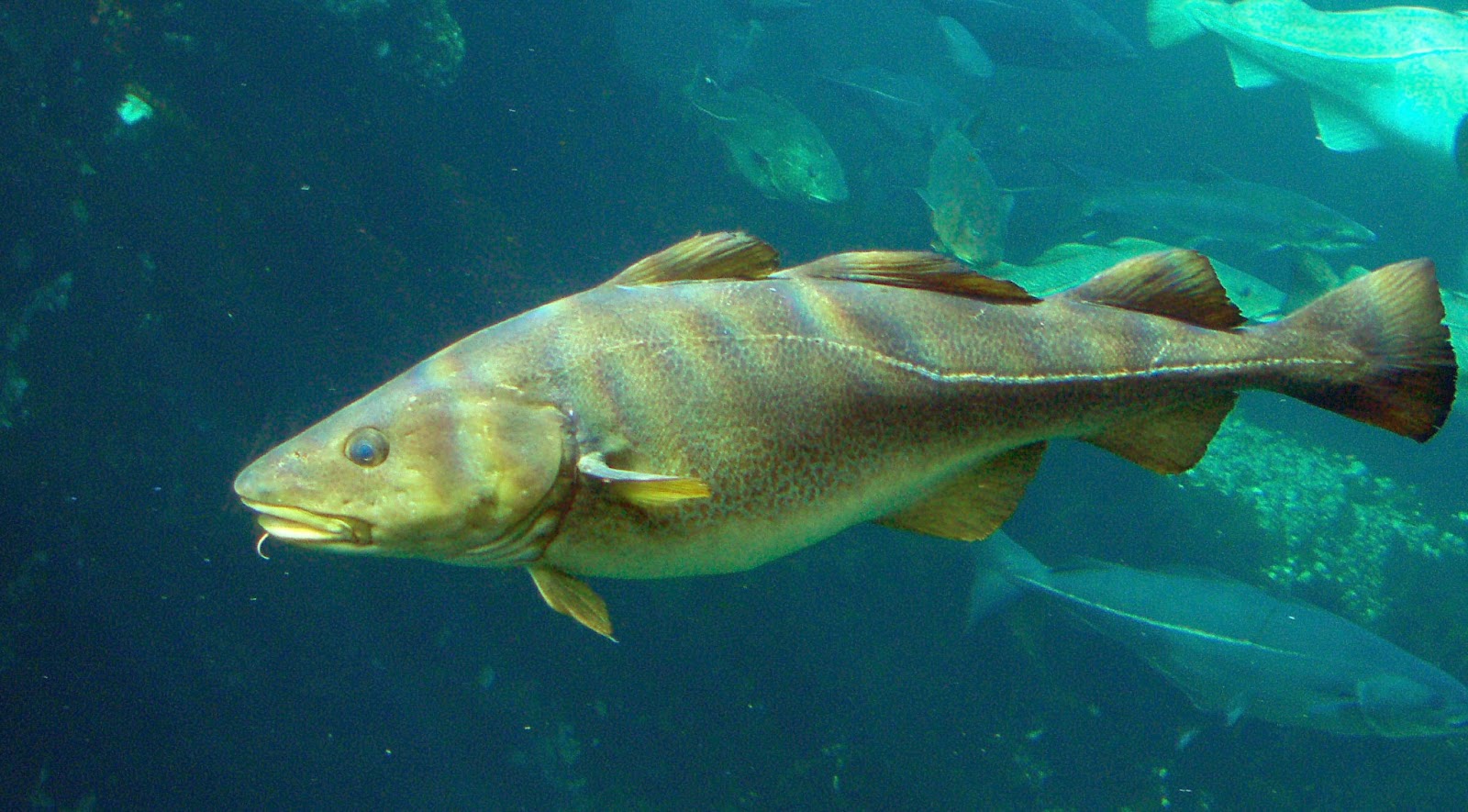
An Atlantic cod, Gadus morhua (photo Wikipedia).
Most fishes are highly fecund, releasing tens to hundreds of thousands or even millions of eggs. Mortality during the early life of fish is incredibly high, often with fewer than one in a thousand surviving the first few days. But, because of the shear number of offspring, small changes in the mortality rate can lead to enormous differences in the number of fish that survive to replenish the population. The great difficulty has been to determine which factors contribute to changes in mortality rate.

Predation and starvation are the two greatest sources of mortality for fish eggs and larvae. Neither of these is random. Bigger, better provisioned eggs are more likely to produce larvae that survive the larval period and replenish the adult population. There are also characteristics of the parents that effect the survival of their offspring, such as when and where they choose to spawn, and how big or old they are.


Predators of fish eggs and larvae are numerous. Jellyfish, like Aurelia aurita, are among them (photo Wikipedia).
Early hypotheses about what regulated survival in the larval period focused on starvation. Hjort's 'critical period' hypothesis (1914) proposed that food resources must be present when larval fish were switching from using their yolk reserves to feeding. Cushing's 'match-mismatch' hypothesis (1975, 1990) recognised that as larvae grow they need progressively larger prey and timing of prey requirement needs to be a match with the timing of prey availability.


Good evidence to support these hypotheses has only emerged recently, with the arrival of technology that can provide long-term measurements over large spatial scales. Platt et al. (2003) combined data from remote-sensing satellites with long-term population surveys of haddock, Melanogrammus aeglefinus. Their data showed that when the peak of spawning occurred after the peak in the spring plankton bloom, survival of larval haddock was much higher.


A haddock, Melanogrammus aeglefinus (photo Wikipedia).
Beaugrand et al. (2003) used data from continuous plankton sampling devices that are opportunistically attached to merchant ships. The devices gave them not only plankton abundance data, but allowed them to measure the size of prey species. Data on cod, Gadus morhua, were obtained from two largely overlapping population surveys. Like Platt et al., they found that the timing of the plankton bloom was important for larval survival, but they also found that the abundance and average size of prey species were important too.

Predation was recognised early on as an important factor influencing the survival of fish larvae. However, research into its effects on fish populations didn't begin in earnest until the 1970's. The research showed that bigger, faster growing larvae were more likely to survive that larval period. Several, subtly different mechanisms were proposed to explain this pattern and are often combined into the 'growth-predation' hypothesis. 

Testing the growth-predation hypothesis in the wild has proved tricky. But, fish have structures in their ears called otoliths that lay down growth rings a bit like the growth rings in a tree. Because the growth rings in otoliths are laid down daily in many fish species they can be used as proxy measurements of size and growth. Several studies have used otoliths to calculate size and growth rates and have universally supported the growth-predation hypothesis (e.g. Hare & Cowen 1997, Meekan et al. 2006).

The otolith of a black rockfish, Sebastes melanops, showing the light and dark bands of yearly growth increments. Smaller daily increments are visible under higher magnifications (photo Vanessa von Biela, USGS).
Mothers are one of the most important influences on the size and growth rate of larval fish, particularly early in life when mortality is highest. The time that mothers spawn determines the match between hatching and the availability of food resources. The amount that mothers invest in their offspring also influences their survival. Bigger eggs typically hatch into bigger larvae that grow faster and are more resistant to starvation Spawning time and investment can depend on the characteristics of mothers.

It's widely documented that larger, older mothers produce more offspring. Fecundity typically increases with the volume of the body cavity, which is roughly proportional to the cube of female length. Berkeley et al. (2004) also showed that larger, older female black rockfish, Sebastes melanops, invested more into their offspring, resulting in faster growing larvae that were more resistant to starvation. 

The blue rockfish, Sebastes mystinus, looks similar to the black rockfish (photo Wikipedia)
The Berkeley et al. paper became frequently cited to make the case that larger, older females needed better protection (e.g. Palumbi 2004, Birkeland & Dayton 2005). Harvesting large females might be much worse for the population because they produce more offspring that have a greater chance of surviving the larval period. Most fisheries remove the larger, older individuals, even when they are not targeted, which might explain why collapsed stocks struggle to recover faster than expected, like the Atlantic cod.

Marshall et al. (2010) argued that it was unjustified to conclude that larger females produce larvae that greater chance of survival. Decades of empirical and theoretical work has shown that the only time mothers should produce larger eggs is when they are releasing offspring into a poorer quality environment. Berkeley et al. tested larvae in common conditions and, therefore, they didn't expose larvae to the conditions that they would have experienced in the wild. 

Larger mothers might provide their offspring with a poorer quality environment in a number of ways. They might expose their offspring to greater competition with their siblings because they release far more larvae. Female size can predict the timing of spawning, and does in the black rockfish, which exposes larvae to different environmental conditions. Therefore, the larger offspring produced by larger mothers might have similar chances of surviving the larval period under natural conditions.

There is some evidence that the decades of theoretical and empirical work might not have captured the whole picture. If all larvae have roughly the same chance of making it through the larval period you would expect that the diversity of surviving larvae would be roughly proportional to the numbers released. Hedgecock et al (2007) estimated that in one cohort of the Pacific oyster, Ostrea edulis, only 10 - 20 individuals produced all of the surviving offspring.


Beldade et al. (2012) conducted a similar study to Hedgecock et al., but they were able to link surviving larvae with adults. They found that larger mothers contributed disproportionally more to the number of larvae that returned to the same population and that greater fecundity alone did not account for the disparity. It's not entirely compelling because it is possible that smaller mothers are producing larvae that preferentially disperse away. It is a tantalizing hint that larger, older mothers really matter more for population replenishment.

Most fisheries models currently do not account for the differences in the survival chances of larvae or the potential differences in the contribution of mothers to the next generation. They treat the survival of all larvae as equally likely, or ignore the larval period altogether. Such models are failing to produce accurate predictions of future stock numbers. Greater understanding of mortality processes in the larval period and the rise of individual based models promise to greatly improve the way fisheries are managed.

References:
Beaugrand, G., Brander, K., Alistair Lindley, J., Souissi, S., & Reid, P. (2003). Plankton effect on cod recruitment in the North Sea. Nature, 426 (6967), 661-664 DOI: 10.1038/nature02164

Beldade, R., Holbrook, S., Schmitt, R., Planes, S., Malone, D., & Bernardi, G. (2012). Larger female fish contribute disproportionately more to self-replenishment. Proceedings of the Royal Society B: Biological Sciences, 279 (1736), 2116-2121 DOI: 10.1098/rspb.2011.2433

Berkeley, S., Chapman, C., & Sogard, S. (2004). Maternal age as a determininant of larval growth and survival in a marine fish, Sebastes melanops. Ecology, 85 (5), 1258-1264 DOI: 10.1890/03-0706

Cushing, D. (1969). The Regularity of the Spawning Season of Some Fishes. ICES Journal of Marine Science, 33 (1), 81-92 DOI: 10.1093/icesjms/33.1.81  

Cushing, D. H. (1990). Plankton production and year-class strength in fish populations - an update of the match mismatch hypothesis. Advances in Marine Biology, 26, 249-293 DOI: 10.1016/S0065-2881(08)60202-3  

Hare, J., & Cowen, R. (1997). Size, Growth, Development, and Survival of the Planktonic Larvae of Pomatomus saltatrix (Pisces: Pomatomidae). Ecology, 78 (8) DOI: 10.2307/2265903

Hedgecock, D., Launey, S., Pudovkin, A., Naciri, Y., Lapègue, S., & Bonhomme, F. (2006). Small effective number of parents (N-b) inferred for a naturally spawned cohort of juvenile European flat oysters Ostrea edulis. Marine Biology, 150 (6), 1173-1182 DOI: 10.1007/s00227-006-0441-y

Hjort, J (1914). Fluctuations in the great fisheries of northern Europe viewed in the light of biological research. Reun. Cons. Int. Explor. Mer, 20, 1-228

Marshall, D., Heppell, S., Munch, S., & Warner, R. (2010). The relationship between maternal phenotype and offspring quality: Do older mothers really produce the best offspring? Ecology, 91 (10), 2862-2873 DOI: 10.1890/09-0156.1   

Meekan, M., Vigliola, L., Hansen, A., Doherty, P., Halford, A., & Carleton, J. (2006). Bigger is better: size-selective mortality throughout the life history of a fast-growing clupeid, Spratelloides gracilis. Marine Ecology Progress Series, 317, 237-244 DOI: 10.3354/meps317237

Platt, T., Fuentes-Yaco, C., & Frank, K. (2003). Spring algal bloom and larval fish survival. Nature, 423 (6938), 398-399 DOI: 10.1038/423398b

Thursday, March 14, 2013

Plastic waste and seabirds

Plastic waste is an important issue for marine conservation. Globally, a greater mass of human waste goes into the ocean than the mass of fish we take out and much of the waste is plastics. And, because plastics breakdown very slowly in the environment they can accumulate in the ocean forming garbage patches. 

Many animals eat or are entangled by plastic debris, which effects animals from very large things like whales to microscopic crustaceans. Photographs of the plastic filled skeletons of albatross chicks on Midway Atoll have placed seabirds among the most recognised victims of plastic pollution. Jennifer Lavers has an interesting article on The Conversation about the problem of plastic pollution for the flesh-footed shearwater and the failure of the Australian Government to place the it on the threatened species list despite significant population declines.

Friday, February 22, 2013

Seaweek!

Seaweek is coming up fast. It's organised by the Marine Education Society of Australia and running from the 2nd to the 10th of March. I've been invited to participate in a day of activities at Rickets Point Marine Sanctuary on the 7th. I'll be talking to primary and high school students about marine introduced species. The day will bring together marine experts from MESA, Parks Victoria, Melbourne Aquarium, Monash University, the Earth Watch Institute, the Ocean Ark Alliance, the Gould League, Marine Care Ricketts Point, Pelican Expeditions, Nautilus Educational and the Australian Youth Climate Coalition (and me, who is not from any of those organisations).

The theme for Seaweek 13 is ‘Sustainable Seas’. The theme provides a focus for students in schools and for communities to inform and inspire them about the diversity of our marine and coastal environments and how, through good management and individual action, we can all contribute towards the sustainability of these environments.


Aims

  • Highlight the sustainable management of Australia’s marine environment;
  • Identify factors that threaten the sustainability of marine and coastal ecosystems;
  • Facilitate the communication of sustainable marine management projects to the education community;
  • Initiate interest and actions for supporting sustainable marine management that help us learn more about and contribute towards the sustainability of our marine and coastal environments; and
  • Provide schools with educational resources available on the MESA website for school’s classroom based activities.
Find out more about Seaweek here.

Thursday, February 21, 2013

The anti-science, anti-environment Victorian Government

The Victorian Government is at it again. They've allowed a "scientific trial" of cattle grazing in Victoria's Alpine National Park against all scientific advice (why conduct a trial when you've already got a robust answer?). They've provided funding to find the Victorian panther, the Australian version of Bigfoot. They've decided to allow private tourist developments in National Parks, when the best thing that National Parks do for the environment is to limit access to people. Now they've decided to redraw the boundaries of the Alpine National Park to allow business at the Falls Creek ski resort to expand. You'd probably be surprised to know that the Victorian Premier is a former director of a real estate company...

Wednesday, January 23, 2013

Ed Yong is treading on my turf

Ed Yong is treading on my turf (or should that be seagrass meadow?). Worse though, is that he is doing it better than me...

I have been writing a post about the longevity of coral reefs under future climate conditions. Yesterday, Ed (I hope I can call him that) posted a piece on the future prospects of retaining coral reefs into the next century. You should go read it, but come back in a few days when I post my own piece that will look at the issues from an evolutionary perspective.

*** UPDATE *** I've published my piece.

Wednesday, January 2, 2013

Flames under the sea

A survey to help locate sites for new marine protected areas has turned up perhaps the largest colony of flame shells, Limaria hians, anywhere in the world. The bed located at the bottom of Loch Alsh in western Scotland, contains at least 100 million individuals and covers 75 hectares.

The flame shell, Limaria hians (photo Wikipedia)
The flame shell is a bivalve mollusk that feeds by extending many orange tentacles out of its shell snaring food from the water column much like corals do. They grow to a maximum of about 4cm long, but most are around 2.5cm. Preserving flame shell beds is a conservation priority because they form nest-like structures that stabilise coarse sandy substrate giving other plants and animals a place to grow.

Monday, December 17, 2012

Shifting baselines in coral cover

ResearchBlogging.orgA great problem for conserving marine ecosystems is that we rarely have a good data on what things were like before human impacts started. In my last post, I wrote about a study that showed that coral cover had declined on the Great Barrier Reef by 50.7% since 1985. At the start of the study coral cover was at 28%, but pristine coral reefs can have over 70% coral cover. This suggests that impacts on the Great Barrier Reef predate the time monitoring started by many years.

A coral outcrop on the Great Barrier Reef (photo Wikipedia)
John Pandolfi at the University of Queensland has been trying to establish the past state of the Great Barrier Reef in numerous ways. One way is to take sediment cores from coral reef and compare the historical diversity and abundance of corals on the reef to the modern community composition. A new study lead by Pandolfi has reconstructed the past coral communities on reefs around Pelorus Island in the Palm Island group. They took cores containing coral remains dating back as far as the mid-third century.

They found that there was a pronounced transition in the coral species on the islands reefs between 1920 and 1955. The transition strongly correlated with a 5 to 10 fold increase in the amount of sediment found in the cores beginning in 1870, but showing several large peaks between the 1920s and 1970s. White settlement and land clearing of the area began in about 1870, the same time that high sediment loads were found in the cores. Prior to that, there was remarkable stability in the coral communities and the amount of sediment reaching the reef.

The new study highlights that reefs in 1985 that were thought to be relatively pristine probably had not been for 50 or 60 years. Therefore attempts to conserve reefs as they were in 1985 is inadequate because these reefs are likely to be already severely impacted by human activities. If we a serious about returning coral reefs to a pristine state, we should be restoring them to what they were like prior to white settlement, not what they were like now after a century of mistreatment.


Roff, G., Clark, T., Reymond, C., Zhao, J., Feng, Y., McCook, L., Done, T., & Pandolfi, J. (2012). Palaeoecological evidence of a historical collapse of corals at Pelorus Island, inshore Great Barrier Reef, following European settlement Proceedings of the Royal Society B: Biological Sciences, 280 (1750), 20122100-20122100 DOI: 10.1098/rspb.2012.2100

Monday, December 3, 2012

Conservation priorities on the Great Barrier Reef

ResearchBlogging.orgA recently published paper on the decline of coral cover on the Great Barrier Reef serves to illustrate an important point; even without climate change we are doing a great deal of damage to some ecosystems. The study by De'ath et al. and published in the Proceedings of the National Academy of Science, finds that coral cover has declined by 50.7% since 1985. They partitioned the losses into 48% tropical cyclones, 42% predation by crown of thorns starfish and 10% to coral bleaching.

The crown of thorns starfish, Acanthaster planci (image Wikipedia)
The declines were not uniform across the reef. Most of the declines were in the southern part of the reef and near to shore, where more people live. Partly this may be due to more frequent storms in the southern part of the reef, but storm frequency has declined in the last 100 years or so. Mostly it's probably because outbreaks of crown of thorns starfish are linked to human activities, such as agriculture and fishing. And these same human activities leave coral less resilient to other impacts and make it more difficult for them to recover from disturbances.

Pollution, sedimentation and overfishing can all change the dynamics of coral reef communities by impairing the ability of corals to recover from other disturbances. Human activities can also increase the mortality of adult coral and reduce the number larvae that survive to become coral. Shifts from coral-dominated communities to seaweed-dominated communities due to these impacts are well documented.

Overfishing, particularly of herbivorous fish, has been strongly linked to shifts in community composition. In direct competition corals lose out to seaweed, which overgrows coral and in some cases uses toxins to kill the coral. Herbivorous fish though, eat the seaweed tipping the balance in favour of the corals. So important are herbivorous fish to corals that some have formed mutualistic relationships with fish, which they signal for help when seaweeds encroach on their space. 

Overfishing has also been suggested to reduce predation on larvae of the crown of thorns starfish, allowing it to reach plague proportions when fish would normally control their numbers. A second hypothesis is that nutrient inputs from farms and cities provides the crown of thorns larvae with large amounts of food, increasing their survival. Neither hypothesis is well supported, but there is growing evidence that both mechanisms are playing a role in crown of thorns outbreaks. 

For corals, like seagrasses, access to light is critical for their survival. Coral derive as much as 90% of their energy from symbiotic algae growing in their tissues. Nutrient inputs and sedimentation reduce the light available to their algal symbionts, which reduces the energy available to them. This can decrease the resilience of corals to other stressors, such as natural disturbance events. The main sources of sedimentation on the Great Barrier Reef are from human activities, such as agricultural run-off and dredging.  

De'ath et al. conclude that there is an urgent need to control crown of thorns outbreaks, especially through improvements to water quality. In the absence of disturbances, the data showed that reefs were able to increase in cover by nearly 3% per year. This is likely to be higher when the full impact of human activities are taken into account. Moreover, their data only go back to 1985, but human impacts on the reef date back to about 100 years before that. The true decline of coral cover on the Great Barrier Reef is, therefore, likely to be far greater than that measured in their study.

De'ath et al. also highlight the impending effects of climate change and ocean acidification. Many people are focused on human emissions of carbon dioxide as the sole problem we need to fix to save the reef. But, it's clear that even without the threats of climate change and ocean acidification the Great Barrier Reef is in great deal of trouble. In order to conserve the reef we need to address the source of these issues now.

De'ath, G., Fabricius, K., Sweatman, H., & Puotinen, M. (2012). The 27-year decline of coral cover on the Great Barrier Reef and its causes Proceedings of the National Academy of Sciences, 109 (44), 17995-17999 DOI: 10.1073/pnas.1208909109

Tuesday, November 13, 2012

More on the iron fertilisation "experiment"

A little while ago I wrote a post on the actions of Russ George, a businessman who has been trying to sell ocean iron fertilisation as a viable method for reducing carbon dioxide in the atmosphere. His arguments about the success of such schemes are way out in front of the science required to support them. He released 100 tons of iron sulfate into the north-eastern Pacific in what he calls an experiment, but what nearly all other pundits have been calling an irresponsible and reckless action.

His supporters have rallied behind him though and have had a presence in nearly every comment thread of prominent science news sites that have covered the issue. So, I thought I would take some time to put my views on the potential dangers of large-scale fertilisation of the ocean with iron.

Phytoplankton is not only reliant on iron to survive. There are several other important nutrients that limit phytoplankton numbers in areas where iron is abundant, such as phosphorous. Large blooms of phytoplankton that are produced by the addition of iron could rapidly deplete other limiting nutrients. Once the bloom has consumed the added iron and collapsed the population may not recover back to what it was prior to the bloom because it is limited by more than iron. 

When the bloom dies and decomposes, it could reduce a molecule that is highly important to a great many marine organisms, oxygen. Areas of the ocean that become so low in oxygen that they are no longer able to support life and know as dead zones. The appearance and expansion of dead zones is often caused in areas where human inputs of important nutrients, such as phosphorus and nitrogen, increases the abundance of phytoplankton. The bacteria that consume the dead phytoplankton also consume the dissolved oxygen, depleting it to levels dangerously low for many other organisms.

The rain of dead phytoplankton could also have serious effects on the seafloor community beneath. Indeed, one of my very first posts on this blog was about how the energy balance in the deep sea was critical to maintaining a high diversity of species in an energy poor, seemingly homogenous environment. A huge input of nutrients from the detritus of a plankton bloom that reaches the seafloor is likely to upset the ecology of the communities found there.

While I think that these are all legitimate concerns, it is important to note that, to my knowledge, none of these effects have been observed in iron fertilisation experiments. Oxygen depletion is a known and well documented effect of phytoplankton blooms. But, iron fertlisation on the scale of Russ George's venture may not be large enough or persist for long enough to have this effect. And natural phytoplankton blooms on the scale of the one observed in the area that George dumped his iron are not unknown.

In fact, some researchers are claiming that the observed phytoplankton bloom was already underway before George released the iron sulfate. Many reports I have read say that that the iron fertilisation occurred in July at the time the plankton bloom was getting started. But, it seems the ship which released the iron sulfate didn't leave port until the 8th of August and probably couldn't have started fertilising until a week later. Natural blooms are known to occur regularly in the area, particularly during summer when offshore currents carry iron-rich water hundreds of kilometers out to sea. Unfortunately, the design of the experiment is so poor that it's hard to tell whether the iron sparked the bloom or how much it contributed to it.


.

Wednesday, October 17, 2012

Playing Russian Roulette with Gaia

The addition of iron to the oceans has been suggested as a mechanism to reduce the amount of carbon dioxide in the atmosphere. In several parts of the ocean, plankton abundance in much lower than expected given the availability of nutrients and sunlight. But, these areas are also low in iron, leading many people to suggest that it's the availability of iron that limits plankton numbers. A while ago I wrote about an experiment in the Southern Ocean that investigated this hypothesis. 

Permission to conduct these experiments was hard to get because the UN has agreed to a moratorium on iron fertilisation until more is known about the effects on other marine life. But, in contravention of the moratorium a rogue businessman has conducted an iron fertilisation 'experiment' in the northeastern Pacific, off the coast of Canada. Russ George has been trying to sell his iron fertilisation scheme to the world as part of the lucrative market for carbon credits.

He convinced the Haida Nation to provide one million dollars funding, apparently by telling them that the dumping of iron would increase salmon numbers in the area. With that money he dumped 100 tons of iron sulfate into the ocean 200 nautical miles west of the islands of Haida Gwaii in July this year. The plankton bloom this created reached 10,000 square kilometers in size. In comparison, the experiment in the Southern Ocean dumped just seven tons of iron sulfate and the bloom peaked at 800 square kilometers.

In conducting this 'experiment' Russ George may have broken international and Canadian laws. It violates the UN moratorium on iron fertilisation and he may have committed fraud in obtaining the funds from the Haida Nation. In any case, there is no evidence that plankton blooms will improve salmon number and only limited evidence that iron fertilisation is an effective mechanism for reducing carbon dioxide. And we know next to nothing about the potential negative impacts of such large blooms.

For more information, including Russ George's history in trying to sell iron fertilisation as a carbon credit scheme, try The Guardian and Deepsea News.

Sunday, October 14, 2012

Human-induced evolution

ResearchBlogging.orgHuman activities have influenced that evolution of many species and not just through artificial selection. Our impacts on ecosystems, use of drugs and pesticides and our harvesting of wild populations is all having an effect on the rate and direction of evolution in many organisms. In fact, many of the frequently cited examples of 'evolution in action' are also examples of human-induced evolution, such as mosquito resistance to DDT and drug resistant bacteria.

The detailed studies on the peppered moth, Biston betularia, provide a classic illustration of evolution in action. The peppered moth is nocturnal, resting during the day on light coloured trees, where it is reasonably well camouflaged. However, during the industrial revolution, trees in forests between London and Manchester became covered in soot and dark coloured morphs increased in frequency from 0.01% of the population to 98% due to increased bird predation on the less camouflaged light coloured morph.

The light (top) and dark (bottom) coloured morphs of the peppered moth, Biston betularia (images Wikipedia)
Although we don't often think of ourselves as predators, hunting and fishing are essentially the same thing. Like predation on peppered moths by birds, they can produce evolutionary change in the target populations. For instance, trophy hunting of bighorn sheep, Ovis canadensis, results in sheep with smaller horns and lighter body weight over time. A couple of recent studies show that behavioural traits are selected too.

Bighorn sheep in Montana (image Wikipedia)
Using GPS devices, Ciuti et al. tracked 122 (77 females and 45 males) elk, Cervus elaphas, to monitor their movements over the course of a year. The males that were the most likely to fall victim to hunters were those that moved more often, traveled the furthest and made greater use of open areas. The pattern was similar, but less pronounced, in females. Older females tended to move less and use of open areas less than younger females, suggesting that they may learn to avoid hunters. They could not assess learning with age in males as all the tracked males were of the same age.

A male elk (image Wikipedia)
Ciuti et al. suggest that the bolder behaviour of the elk that were harvested may provide them with protection from other predators, like wolves and bears. Moving long distances and using open areas may make it easier for elk to avoid natural predators, but it favours harvesting by humans with high-powered rifles. It's a neat hypothesis and they say that they intend to test it in future experiments.

A second study in rainbow trout, Oncorhynchus mykiss, looked at growth rate, a trait closely correlated with activity rate. To fuel a fast growth rate, it's thought that fish must spend more time actively searching for food, which is supported in the literature. Biro stocked four fishless lakes in Canada with trout that were slow-growing, intermediately-growing and fast-growing. By stocking the lakes, Biro knew the numbers of fish present in each lake and in each experimental group. He then randomly sampled the four lakes using a sampling method that wasn't size-selective.

Rainbow trout (image US Fisheries and Wildlife Service)
There was substantial variation in the proportion of each of the experimental groups that was caught in each lake. However, faster growing trout were consistently more likely to be caught than intermediate or slow-growing trout. Overall, fast-growing trout were nearly twice as likely to be caught than the two groups with slower growth rates. Importantly, size did not matter; small, slow-growing fish were still less likely to be caught than small, fast-growing fish.

Biro's study has the issue that it did not directly assess behaviour, but relied on growth rate as a proxy measure. However, it is consistent with other studies that show fish personalities influence the probability that they are caught by different collection techniques. Bluegill sunfish, for instance, are more likely to be caught in the wild by angling when they're less active. Intriguingly, there is also an interaction between habitat and capture method as less active bluegill sunfish are also less likely to be caught by angling in the open areas of artificial ponds.  

I'm troubled by the correlation between growth rate and supposed personality traits. It suggests that what is being measured as personality might actually be a by-product of physiology and not a separate trait. But, other studies I looked at showed that in some situations less active fish grow faster than more active fish, which suggests that they are independent traits.

In any case, the Cuiti et al. and Biro studies show quite nicely that humans are probably influencing the direction of evolution in the populations that we harvest by hunting and fishing. Their work adds to a growing body of research that humans are influencing the evolution of many species. Indeed, Stephen Palumbi has argued that humans are currently the World's greatest evolutionary force.

Biro PA (2012). Are most samples of animals systematically biased? Consistent individual trait differences bias samples despite random sampling. Oecologia PMID: 22885993  

Ciuti, S, Muhly, T B, Paton, D G, McDevitt, A D, Musiani, M, & Boyce, M S (2012). Human selection of elk behavioural traits in a landscape of fear Proceedings of the Royal Society: B, 279 (1746), 4407-4416 DOI: 10.1098/rspb.2012.1483  

Palumbi, S R (2001). Humans as the World's greatest evolutionary force Science, 293 (5536), 1786-1790 DOI: 10.1126/science.293.5536.1786  

Wilson, A D M, Binder, T R, McGrath, K P, Cooke, S J, & Godin, J J (2011). Capture technique and fish personality: angling targets timid bluegill sunfish, Lepomis macrochirus Canadian Journal of Fisheries and Aquatic Sciences, 68 (5), 749-757 DOI: 10.1139/f2011-019

Friday, August 17, 2012

Australia's new marine parks revisited

Last month I wrote about the release of a draft plan for a set of marine parks in Australian Federal waters. I expressed concern that the large area and their distance from shore would make enforcement of the fully protected areas difficult. It seems I'm not alone in this concern. Three marine scientists in Western Australia have written an article in The Conversation expressing similar concerns and others about the design of the marine parks, including the under-representation of some habitats within the parks.

Monday, August 6, 2012

Playing Gaia

ResearchBlogging.org Phytoplankton doesn't need much to keep it happy. Just some sunlight and a few important macronutrients, such as nitrate, phosphate and silicic acid. However, in some areas of the ocean the abundance of phytoplankton is substantially lower than would be expected from the plentiful supply of nutrients. Such areas are known as "high-nutrient, low-cholorophyll" (HNLC) regions and make up 20% of the ocean surface.

Diatoms make up a large part of the phytoplankton (photo Wikipedia)
A feature often associated with HNLC regions is the low bioavailability of iron. Iron is critical for phytoplankton as it is required to make chlorophyll and important enzymes like nitrate reductase. It has, therefore, been suggested that iron bioavailability is the most important factor limiting phytoplankton population size in HNLC regions. But, zooplankton grazing and deep mixing of surface water that reduces the time that phytoplankton has access to light have also been hypothesised.

Progression of the largest recorded natural phytoplankton bloom in the Southern Ocean, which occurred earlier this year. It was thought to be caused by the addition of iron blown into the sea by strong offshore winds. At its peak, it measured 100 km north-south and 200 km east-west (images Jan Lieser & NASA Terra Modis).
A study, published in Nature, investigated the effect of adding iron to the water on phytoplankton abundance. It was not the first experiment to do so, there have been several. But, unlike the others, this experiment showed that much of the dead phytoplankton was transported into the deep sea. Which is important for our understanding of the role that the ocean plays in regulating the climate.

A map showing the location of iron fertilization experiments. The experiment published in Nature is the EIFEX study, which is the second from the right (image taken from Baar et al. 2004).
During photosynthesis, phytoplankton consumes carbonic acid, which is formed when carbon dioxide dissolves into water. If sufficient quantities of the carbon that the phytoplankton take up can be transported into the deep ocean, away from the atmosphere, it can effectively reduce the amount of carbon dioxide in the atmosphere, cooling the planet. Indeed, phytoplankton blooms may have played a role in triggering past ice ages.

The study recorded phytoplankton abundance and particles falling beneath the bloom at various depths for 37 days, capturing the rise and fall of the bloom. The bloom peaked after 24 days; chlorophyll concentrations was almost four times those at control sites and the bloom covered nearly 800 square kilometers. As the bloom collapsed, at least half of the biomass sank below 1,000 meters, most of which is likely to have reached the seafloor.

Such evidence indicates that at larger scales and over longer periods, algal blooms could transport climatically significant amounts of carbon into the deep sea. In surface waters, the carbon could be returned to the atmosphere in a few months. But, in deep sea sediments the carbon might not reach the atmosphere for centuries. However, more work needs to be done to confirm the effect of phytoplankton blooms on climate.

A surprising finding of the study was that light availability did not seem to effect the plankton bloom as much as might of been expected. Chlorophyll concentrations remained high down to 100 meters where light availability should limit phytoplankton abundance. Indeed, the results showed that chlorophyll concentrations were similar or higher than those recorded at shallower depths in previous iron fertilization experiments.

Reference:
Victor Smetacek, Christine Klaas, Volker H. Strass, Philipp Assmy, Marina Montresor, Boris Cisewski, Nicolas Savoye, Adrian Webb, Francesco d’Ovidio, Jesus M. Arrieta, Ulrich Bathmann, Richard Bellerby, Gry Mine Berg, Peter Croot, Santiago Gonzalez, Joachim Henjes, Gerhard J. Herndl, Linn J.Hoffmann, Harry Leach, Martin Losch, Matthew M. Mills, Craig Neill, Ilka Peeken, Rudiger Rottgers, Oliver Sachs, Eberhard Sauter, Maike M. Schmidt, Jill Schwarz, Anja Terbruggen, & Dieter Wolf-Gladrow (2012). Deep carbon export from a Southern Ocean iron-fertilized diatom bloom Nature, 487 (7407), 313-319 DOI: 10.1038/nature11229