Showing posts with label community ecology. Show all posts

Wednesday, January 2, 2013

Flames under the sea

A survey to help locate sites for new marine protected areas has turned up perhaps the largest colony of flame shells, Limaria hians, anywhere in the world. The bed located at the bottom of Loch Alsh in western Scotland, contains at least 100 million individuals and covers 75 hectares.

The flame shell, Limaria hians (photo Wikipedia)
The flame shell is a bivalve mollusk that feeds by extending many orange tentacles out of its shell snaring food from the water column much like corals do. They grow to a maximum of about 4cm long, but most are around 2.5cm. Preserving flame shell beds is a conservation priority because they form nest-like structures that stabilise coarse sandy substrate giving other plants and animals a place to grow.

Monday, December 17, 2012

Shifting baselines in coral cover

ResearchBlogging.orgA great problem for conserving marine ecosystems is that we rarely have a good data on what things were like before human impacts started. In my last post, I wrote about a study that showed that coral cover had declined on the Great Barrier Reef by 50.7% since 1985. At the start of the study coral cover was at 28%, but pristine coral reefs can have over 70% coral cover. This suggests that impacts on the Great Barrier Reef predate the time monitoring started by many years.

A coral outcrop on the Great Barrier Reef (photo Wikipedia)
John Pandolfi at the University of Queensland has been trying to establish the past state of the Great Barrier Reef in numerous ways. One way is to take sediment cores from coral reef and compare the historical diversity and abundance of corals on the reef to the modern community composition. A new study lead by Pandolfi has reconstructed the past coral communities on reefs around Pelorus Island in the Palm Island group. They took cores containing coral remains dating back as far as the mid-third century.

They found that there was a pronounced transition in the coral species on the islands reefs between 1920 and 1955. The transition strongly correlated with a 5 to 10 fold increase in the amount of sediment found in the cores beginning in 1870, but showing several large peaks between the 1920s and 1970s. White settlement and land clearing of the area began in about 1870, the same time that high sediment loads were found in the cores. Prior to that, there was remarkable stability in the coral communities and the amount of sediment reaching the reef.

The new study highlights that reefs in 1985 that were thought to be relatively pristine probably had not been for 50 or 60 years. Therefore attempts to conserve reefs as they were in 1985 is inadequate because these reefs are likely to be already severely impacted by human activities. If we a serious about returning coral reefs to a pristine state, we should be restoring them to what they were like prior to white settlement, not what they were like now after a century of mistreatment.


Roff, G., Clark, T., Reymond, C., Zhao, J., Feng, Y., McCook, L., Done, T., & Pandolfi, J. (2012). Palaeoecological evidence of a historical collapse of corals at Pelorus Island, inshore Great Barrier Reef, following European settlement Proceedings of the Royal Society B: Biological Sciences, 280 (1750), 20122100-20122100 DOI: 10.1098/rspb.2012.2100

Monday, December 3, 2012

Conservation priorities on the Great Barrier Reef

ResearchBlogging.orgA recently published paper on the decline of coral cover on the Great Barrier Reef serves to illustrate an important point; even without climate change we are doing a great deal of damage to some ecosystems. The study by De'ath et al. and published in the Proceedings of the National Academy of Science, finds that coral cover has declined by 50.7% since 1985. They partitioned the losses into 48% tropical cyclones, 42% predation by crown of thorns starfish and 10% to coral bleaching.

The crown of thorns starfish, Acanthaster planci (image Wikipedia)
The declines were not uniform across the reef. Most of the declines were in the southern part of the reef and near to shore, where more people live. Partly this may be due to more frequent storms in the southern part of the reef, but storm frequency has declined in the last 100 years or so. Mostly it's probably because outbreaks of crown of thorns starfish are linked to human activities, such as agriculture and fishing. And these same human activities leave coral less resilient to other impacts and make it more difficult for them to recover from disturbances.

Pollution, sedimentation and overfishing can all change the dynamics of coral reef communities by impairing the ability of corals to recover from other disturbances. Human activities can also increase the mortality of adult coral and reduce the number larvae that survive to become coral. Shifts from coral-dominated communities to seaweed-dominated communities due to these impacts are well documented.

Overfishing, particularly of herbivorous fish, has been strongly linked to shifts in community composition. In direct competition corals lose out to seaweed, which overgrows coral and in some cases uses toxins to kill the coral. Herbivorous fish though, eat the seaweed tipping the balance in favour of the corals. So important are herbivorous fish to corals that some have formed mutualistic relationships with fish, which they signal for help when seaweeds encroach on their space

Overfishing has also been suggested to reduce predation on larvae of the crown of thorns starfish, allowing it to reach plague proportions when fish would normally control their numbers. A second hypothesis is that nutrient inputs from farms and cities provides the crown of thorns larvae with large amounts of food, increasing their survival. Neither hypothesis is well supported, but there is growing evidence that both mechanisms are playing a role in crown of thorns outbreaks. 

For corals, like seagrasses, access to light is critical for their survival. Coral derive as much as 90% of their energy from symbiotic algae growing in their tissues. Nutrient inputs and sedimentation reduce the light available to their algal symbionts, which reduces the energy available to them. This can decrease the resilience of corals to other stressors, such as natural disturbance events. The main sources of sedimentation on the Great Barrier Reef are from human activities, such as agricultural run-off and dredging.  

De'ath et al. conclude that there is an urgent need to control crown of thorns outbreaks, especially through improvements to water quality. In the absence of disturbances, the data showed that reefs were able to increase in cover by nearly 3% per year. This is likely to be higher when the full impact of human activities are taken into account. Moreover, their data only go back to 1985, but human impacts on the reef date back to about 100 years before that. The true decline of coral cover on the Great Barrier Reef is, therefore, likely to be far greater than that measured in their study.

De'ath et al. also highlight the impending effects of climate change and ocean acidification. Many people are focused on human emissions of carbon dioxide as the sole problem we need to fix to save the reef. But, it's clear that even without the threats of climate change and ocean acidification the Great Barrier Reef is in great deal of trouble. In order to conserve the reef we need to address the source of these issues now.

De'ath, G., Fabricius, K., Sweatman, H., & Puotinen, M. (2012). The 27-year decline of coral cover on the Great Barrier Reef and its causes Proceedings of the National Academy of Sciences, 109 (44), 17995-17999 DOI: 10.1073/pnas.1208909109

Tuesday, November 13, 2012

More on the iron fertilisation "experiment"

A little while ago I wrote a post on the actions of Russ George, a businessman who has been trying to sell ocean iron fertilisation as a viable method for reducing carbon dioxide in the atmosphere. His arguments about the success of such schemes are way out in front of the science required to support them. He released 100 tons of iron sulfate into the north-eastern Pacific in what he calls an experiment, but what nearly all other pundits have been calling an irresponsible and reckless action.

His supporters have rallied behind him though and have had a presence in nearly every comment thread of prominent science news sites that have covered the issue. So, I thought I would take some time to put my views on the potential dangers of large-scale fertilisation of the ocean with iron.

Phytoplankton is not only reliant on iron to survive. There are several other important nutrients that limit phytoplankton numbers in areas where iron is abundant, such as phosphorous. Large blooms of phytoplankton that are produced by the addition of iron could rapidly deplete other limiting nutrients. Once the bloom has consumed the added iron and collapsed the population may not recover back to what it was prior to the bloom because it is limited by more than iron. 

When the bloom dies and decomposes, it could reduce a molecule that is highly important to a great many marine organisms, oxygen. Areas of the ocean that become so low in oxygen that they are no longer able to support life and know as dead zones. The appearance and expansion of dead zones is often caused in areas where human inputs of important nutrients, such as phosphorus and nitrogen, increases the abundance of phytoplankton. The bacteria that consume the dead phytoplankton also consume the dissolved oxygen, depleting it to levels dangerously low for many other organisms.

The rain of dead phytoplankton could also have serious effects on the seafloor community beneath. Indeed, one of my very first posts on this blog was about how the energy balance in the deep sea was critical to maintaining a high diversity of species in an energy poor, seemingly homogenous environment. A huge input of nutrients from the detritus of a plankton bloom that reaches the seafloor is likely to upset the ecology of the communities found there.

While I think that these are all legitimate concerns, it is important to note that, to my knowledge, none of these effects have been observed in iron fertilisation experiments. Oxygen depletion is a known and well documented effect of phytoplankton blooms. But, iron fertlisation on the scale of Russ George's venture may not be large enough or persist for long enough to have this effect. And natural phytoplankton blooms on the scale of the one observed in the area that George dumped his iron are not unknown.

In fact, some researchers are claiming that the observed phytoplankton bloom was already underway before George released the iron sulfate. Many reports I have read say that that the iron fertilisation occurred in July at the time the plankton bloom was getting started. But, it seems the ship which released the iron sulfate didn't leave port until the 8th of August and probably couldn't have started fertilising until a week later. Natural blooms are known to occur regularly in the area, particularly during summer when offshore currents carry iron-rich water hundreds of kilometers out to sea. Unfortunately, the design of the experiment is so poor that it's hard to tell whether the iron sparked the bloom or how much it contributed to it.


.

Tuesday, August 14, 2012

Shark week

Apparently it's the 25th year of the Discovery Channel's shark week. So, you can listen to deep, manly voices leaving dramatic pauses between words as you watch sharks all this week. Well, assuming you have a Discovery Channel subscription...

Perhaps in celebration, but more likely as coincidence, Ed Yong has an interesting piece on discovering the past shark biodiversity of a Central Pacific island by examining cultural artifacts.

Monday, July 23, 2012

Two's company, three's community ecology

ResearchBlogging.orgA few days ago I wrote about a review paper in Nature Geoscience, which concluded that seagrass meadows were better at storing carbon than terrestrial forests. One of the reasons for this is that, rather than being broken down to carbon dioxide, the organic matter beneath seagrass meadows is broken down anaerobically to hydrogen sulphide.

Hydrogen sulphide is toxic to the seagrass and should build up as more organic matter accumulates over time. Until a new paper in Science, it was unclear how the plants coped with the gas. Seagrasses do transport oxygen to their roots, which is released into the surrounding soil, mitigating against the toxic effects of sulfide. But, sulfide production can outpace the transport of oxygen, especially at higher temperatures, which should result in reduced productivity and mortality. 

Seagrass meadows are, in contrast, persistent and highly productive, which suggests that there's more than oxygen transport going on. The paper provides data to show that burrowing Lucinid bivalves commonly co-occur in high abundance with seagrass meadows. And furthermore, the Lucinids increasingly diversified as seagrasses evolved and became more common in the oceans.

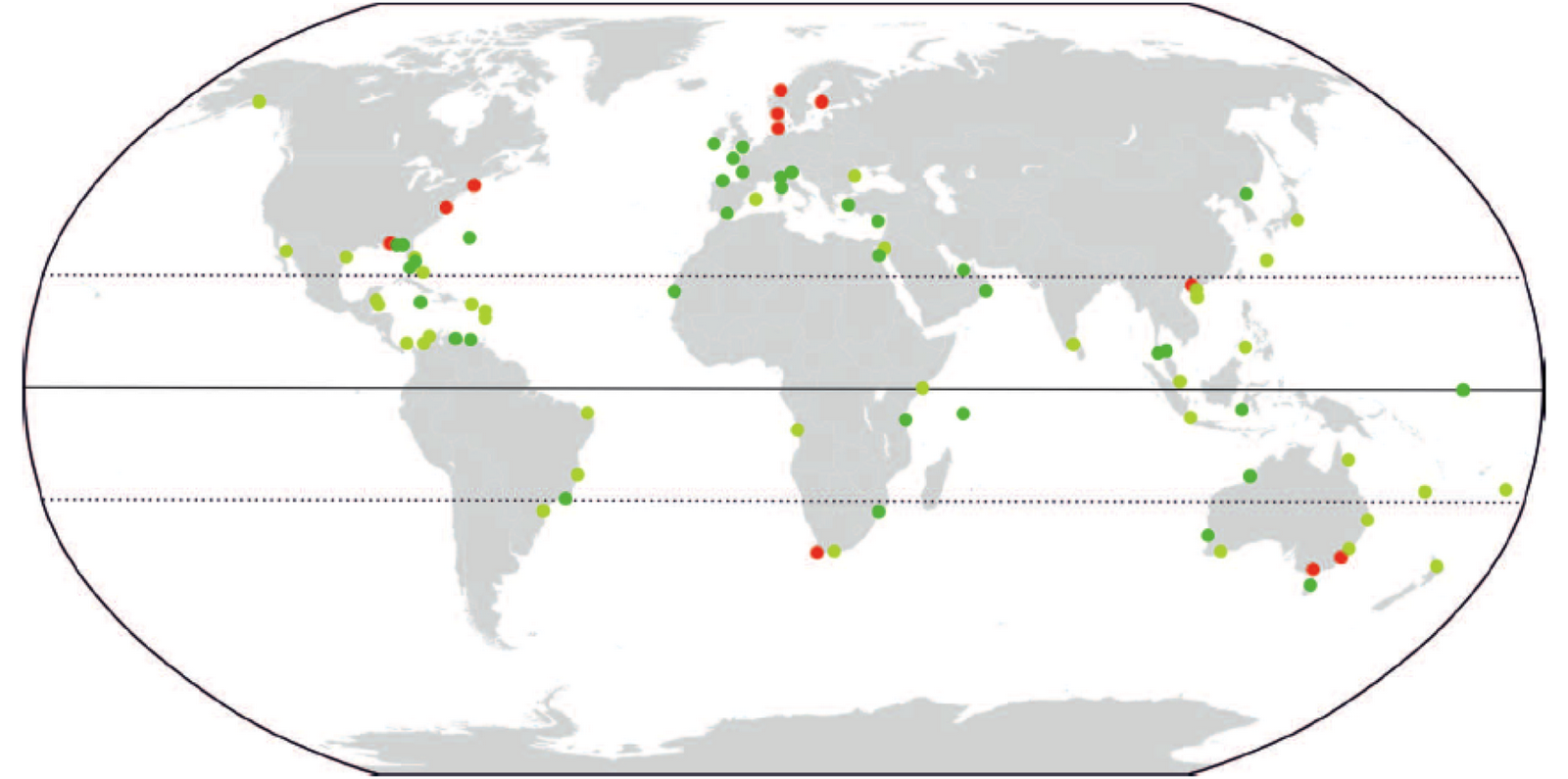
A map showing the locations where seagrass occur with (green spots) or without (red spots) lucinid bivalves. The bivalves were present in 97% of tropical, 90% of subtropical, and 56% of temperate seagrass meadows (image taken from the paper).
Lucinids are known to form symbiotic relationships with sulfur oxidising bacteria. The bivalves bring oxygen and sulfides to their gills where the bacteria use them to fuel the production of sugars, which feed them and their bivalve hosts. The paper hypothesises that seagrass also participates in the symbiosis through the transport of oxygen to its roots, which provides ideal conditions for the lucinids and their gill bacteria.

The lucinid bivalve Loripes lacetus (photo idscaro seashell directory)
They tested the hypothesis by growing both a lucinid bivalve (Loripes lacteus) and a seagrass (Zostera noltii) in the laboratory. They examined the effect of sulfide on the bivalve and seagrass when they were both present or when the partner was absent. And their results were intriguing, particularly the effects on seagrass.

The seagrass Zostera marina, which is very similar to Z. noltii (image wikipedia)
The seagrass had greater biomass of both leaves and roots when no sulfide was added and the bivalves had higher weights relative to their shell size when it was. But, when sulfide was added both the seagrass and the bivalve did better when they both occurred together. Interestingly, the seagrass did best when the bivalve was present, but no sulfide was added. This seems to be because sulfide built up in the treatments, even when it was not added.

The results largely confirmed the hypothesis that there is a three species symbiotic relationship. Seagrass benefits from the removal of sulfide by the bacteria-bivalve symbiosis and the bivalve benefits from the oxygen provided by the seagrass. Furthermore, in the wild the bivalve may benefit from the presence of seagrass because seagrasses indirectly stimulate sulfide production by accumulating organic matter in the soils beneath the growing meadows.

The results have potentially significant implications for seagrass conservation. Many conservation projects attempt to restore lost seagrass meadows by moving plants from other locations were they're doing well. But, the results of this procedure are mixed. This research suggests that moving the bivalve as well as the seagrasses might lead to greater success.
Tjisse van der Heide, Laura L. Govers, Jimmy de Fouw, Han Olff, Matthijs van der Geest, Marieke M. van Katwijk, Theunis Piersma, Johan van de Koppe, Brian R. Silliman, Alfons J. P. Smolders, & Jan A. van Gils (2012). A three-stage symbiosis forms the foundation of seagrass ecosystems Science, 336 (6087), 1432-1434 DOI: 10.1126/science.1219973

Monday, May 21, 2012

Making the connections Loom-inous

Plankton numbers are limited by a few key nutrients. When these increase in abundance, so do the phytoplankton (the part of the plankton that photosynthesizes) and the zooplankton (the animal part of the plankton). In turn, the increased plankton abundance attracts the animals that feed on them, like manta rays.


It turns out that many of the nutrients that plankton need are in bird poo, which is also known as guano. Offshore of the places that birds nest can be higher in these crucial nutrients as the rain washes them out of the guano and into sea. When land use changes, so that birds no longer nest where used to also causes manta rays to become much less common out to sea.


Carl Zimmer, who is one of the best science journalists in the world today, has written an excellent piece about the connections between life on land and life in the sea. Much of it concerns a new study that documents the changes in manta ray populations with changes in land use. You should go and read it.

Tuesday, February 28, 2012

Flowering plants in the sea part 2 - Sex

A while ago I wrote about seagrass and some of the interesting adaptations that they have to the low light levels in the sea. Another important part of their biology that had to adapt to conditions in the marine environment were their flowers. Because seagrasses moved into the sea on multiple occasions there are several strategies that they use for pollination.

The most recent entrants to the sea, in the genus Enhalus, have flowers that are pollinated in air. Male flowers break away from the plant and fertilise the female flowers, which are attached to the plant by long coiled tendrils. Unlike many other types of seagrass, the female flowers are easily recognised as flowers.

The floating female flower of Enhalus acroides. The small white polystyrene bead-like objects are the male flowers (photo The Tide Chaser). 
A close up of the male flowers of E. acroides (photo Urban Forrest).

Pollination is important in terrestrial plant populations, but was thought not to be terribly important in seagrass populations because they are mostly clonal and populations expand by vegetative growth. Indeed, expansion via the rhizomes can produce large seagrass meadows that contain genetically very similar plants.

The female flower of surfgrass, Phyllospadix torreyi  (photo Carol Blanchette).
The flower of eelgrass, Zostera marina (photo Jan Holmes)

Seagrasses also invest a lot of energy into sexual reproduction. This is curious because it takes energy away from vegetative growth, which is primarily how meadows are maintained and recover from damage. Indeed, sex seems paradoxical in species, like segrasses, that can produce offspring without sex.

One potential reason for the large investment in sexual reproduction is seagrasses is long range dispersal. Vegetative growth expands meadows, and can do so quite rapidly, but it can't jump large gaps and establish new populations or spread genes to new locations. Dispersing pollen and seeds may be able to accomplish this.

The pollen of seagrasses is large and elongate (relative to other flowering plants), and consequently, poorly suited to long distance travel. Although estimates are rare, some studies suggest that pollen may only be able to travel a few tens of meters. Pollination, therefore, is likely to occur at local scales in most seagrasses.

The fruit of eelgrass, Zostera marina. Each fruit contains a single seed (photo Jan Holmes).
The seeds of seagrasses have the potential to disperse genes much further than the pollen and establish new meadows. Seagrass seeds, or the structures that carry the seeds (e.g. fruit) have a variety of adaptations for dispersal that effect how far the seeds will travel before they start a new population. Probably the most important factor determining dispersal distance.

The seeds themselves are usually neutrally or negatively buoyant because they must eventually reach the sediment to grow into an adult plant. The structures that carry the seeds, however, are often floating and can transport the seeds considerable distances (up to several hundred kilometers). Some seagrasses are even able to transport their seeds in the insides of herbivores like dugongs and turtles.

Dugongs are mostly interesting because they transport seagrass seeds.
Another reason that sex is important for seagrasses is the resilience of populations to disturbance. We know that communities with a greater diversity of species often have an enhanced ability to resist and recover from disturbances. Interestingly, seagrass patches that have higher genetic diversity show a greater resistance to damage by herbivores and recover faster after damage. Although, the faster recovery may be due to the lower levels of damage in more diverse patches than faster rates of vegetative growth.


Further reading:


1 G. A. Kendrick et al. (2012). The Central Role of Dispersal in the Maintenance and Persistence of Seagrass Populations BioScience, vol 62(1): 56-65


2 J. D. Ackerman (2006). Sexual Reproduction of Seagrasses: Pollination in the Marine Context. In: Seagrasses: Biology, Ecology and Conservation (A. W. D. Larkum, R. J. Orth, C. Duarte Eds.). 89 - 109


3 R. J. Orth et al. (2006) Ecology of Seagrass Seeds and Dispersal Strategies. In: Seagrasses: Biology, Ecology and Conservation (A. W. D. Larkum, R. J. Orth, C. Duarte Eds.). 111 - 133


4 A. R. Hughes and J. J. Stachowicz (2004)Genetic diversity enhances the resistance of a seagrass ecosystem to disturbance. PNAS vol 101(24): 8998 - 9002.
  

Friday, February 24, 2012

Catlin Seaview Survey

The Catlin Seaview Survey will attempt to document the Great Barrier Reef in  a similar way to Google's Street View project. The images of the reef will be available through Google Earth and Google maps and cover a depth range of 0 - 100 meters.


The Catlin Seaview Survey is first and foremost an important scientific expedition. It aims to carry out the first comprehensive study to document the composition and health of coral reefs on the Great Barrier Reef and Coral Sea across an unprecedented depth range (0-100m) – addressing a series of important questions regarding the changes associated with the rapidly warming and acidifying oceans.However this is not just another scientific survey.Usually scientific surveys don’t have the ability to really capture the public’s imagination and engage people in the science. Expeditions and their findings tend only to be fascinating to other scientists. This  project is very different. The images from the expedition, when stitched together, will allow scientists and the public at large to explore the reef remotely through any device connected to the Internet. It will allow them to choose a location, dip underwater, look around and go off on a virtual dive. It has the potential of engaging people with the life and science of our oceans in a way that’s not been possible until now. It is a very exciting time.

Thursday, January 26, 2012

Flowering plants in the sea, part 1 - photosynthesis

Just as whales are mammals that have gone back to the sea, so seagrasses are flowering plants that have gone back to the sea. Interestingly, seagrasses appear to have gone back to sea several times, but have evolved many strikingly similar features for survival in the marine environment.

Seagrass in the genus Zostera
The feature that gives seagrasses their name, is the strap-like leaves which look similar to the leaves of the true grasses. Although the leaf shape is similar among the different groups of seagrass there are enough differences to indicate that it's a trait that has evolved separately in each of the seagrass lineages. Something that is supported by genetic analyses.

Seagrass growing at depth appears blue because water absorbs more light at the red end of the spectrum
One of the important selection pressures on seagrasses is access to light for photosynthesis. Water absorbs light and absorbs some wavelengths of light better than others, which is what makes it appear blue. Suspended particles in the water column and organisms growing on the leaf surface (epiphytes) attenuate light available to seagrass for photosythesis further. The light environment of seagrasses is, therefore, very different from that experienced by terrestrial plants.

Seagrass from the genus Halodule with epiphytic organisms growing on its leaves
Seagrasses have several adaptations that allow them to survive in low-light conditions. Their chloroplasts occur in shallower tissues than terrestrial plants. The leaves also contain very little structural material, so a larger proportion of the plant is capable of photosynthesis than most terrestrial plants.

Another property of the marine environment that differs from terrestrial plant habitats is wave action. Wave action moves the seagrass backwards and forwards exposing different sides of the leaf to alternating high and low light levels. As a adaptation to these conditions both sides of the seagrass leaf are equally capable of photosynthesis. This is unlike many terrestrial plants where photosynthesis occurs mostly in the upper surface of the leaf.

Light levels can vary strongly in the marine environment on short and long time scales. For instance, light levels can vary on short time scales with changing tide heights and increased turbidity due to wind and wave action or can vary on long time scales with changes in day length and the number of organisms growing on the seagrass. To cope with periods of low light, seagrasses make use of rhizomes. Rhizomes are modified stems that grow horizontally and are used to store the products of photosynthesis when times are good for times when little or no photosynthesis can be achieved.

The seagrass Zostera marina showing the rhizome in the bottom of the image
It's the energy-rich rhizomes that make seagrass an important source of food for many marine animals and water birds, such as dugongs, manatees, turtles and swans.

Thursday, January 19, 2012

Phytoplankton from space

The plankton consists largely of small organisms such as bacteria, plants and animals that drift at the mercy of ocean currents. The phytoplankton is the component of the plankton that is able to photosynthesize and it therefore very important in marine food-webs as primary producers. Indeed, phytoplankton are important for almost all life on Earth as they carry out about half of all photosynthetic activity, and therefore produce much of the oxygen in the atmosphere.

Diatoms, one of the most numerically dominant types of phytoplankton. Other important groups include dinoflagellates, cyanobacteria and algae.
Phytoplankton are restricted to the surface water where sunlight can reach them. Their numbers there are limited by the availability of certain nutrients. When these nutrients become abundant, such as during the upwelling of water from the deep ocean, the phytoplankton numbers increase rapidly. Such events are called 'blooms' and can be large enough to be detected from space.

A false-colour image of a phytoplankton bloom in the South Atlantic Ocean taken by the Earth-observing satellite Envisat. The colours represent the density (shade) and types (colour) of phytoplankton present.
Different types of phytoplankton use different combinations of pigment for photosynthesis. Different pigments absorb different wavelengths of light and this allows satellites to make a coarse identification of the species of phytoplankton present in a bloom by detecting the reflected light. Using this information false-colour pictures of a bloom, such as the one above, can be constructed to identify when, where and what types of phytoplankton are blooming. This is important information that assists with our understanding of the effects of human impacts on the marine environment, such as pollution and climate change.

Like life on the deep seafloor, the diversity of species in the plankton presents a paradox. Phytoplankton exist in a seemingly uncomplicated environment and compete for a small number of limiting resources, a situation that should favour a limited set of species, yet there is a huge diversity. Perhaps small variations in the spatial and temporal availability of the resources and variations in temperature create the complex set of niches required to support high diversity, as they do in the deep.

This post was inspired by a post on Sandwalk. The image of the phytoplankton bloom can be found (and downloaded) on the European Space Agency website here.

Friday, January 13, 2012

Coral Sea Marine Park

The Australian Government is considering submissions to its Coral Sea Commonwealth Marine Reserve proposal. The proposal is seen by many leading scientists as insufficient to properly protect the area from fishing and other impacts (e.g. here and here).

Should the park go ahead as it is currently proposed it will be the largest marine park ever established. But, less than half of it will be given full protection and this area is the part furthest from shore and already the least impacted by commercial and recreational fishing.

Overfishing is a significant threat to coral reefs and is likely to decrease the resilience of coral reefs to climate change1. It would be good to get greater protection of this area from fishing activities. If you would like to contribute go here for a guide to writing a submission, or go here to view the proposal. The consultation process ends on February 24, 2012.


1 Pandolfi, J. M., Connolly, S. R., Marshall, D. J., Cohen, A. L. Projecting Coral Reef Futures Under Global Warming and Ocean Acidification. Science 333 no. 6041, 418-422, doi:10.1126/science.1204794 (2011).

Monday, January 2, 2012

Deep-sea diversity

Many people, if they were asked "in which ecosystem would you find the highest diversity of species in the ocean?", would answer "coral reefs". And they'd probably be right. But there is another ecosystem in the ocean that is comparably diverse. Surprisingly, it's the deep seafloor.


Ecosystems that support high diversity are generally those that are spatially complex and have a high productivity allowing for a large number of niches that various organisms can occupy. In contrast to the high diversity habitats that most people are familiar with, the deep sea consists of energy poor, spatially uncomplicated mud flats. It was therefore expected that there would not be a high diversity of life in the deep ocean. However, in the 60's and 70's surveys of species richness in deep-sea sediments found that hundreds of species could exist in just a few square meters.

The deep seafloor is energy poor because no light reaches it and consequently there are no primary producers, except in rare locations like hydrothermal vents and methane seeps. The energy reaching the deep seafloor, therefore, comes almost entirely from the shallow oceans above where photosynthesis is possible. The detritus of the life above that trickles down to the deep is called marine snow. Very little of of the productivity of the shallow seas reaches the deep seafloor because most of the detritus is consumed before it gets to the bottom.


The source and fate of marine snow in the oceans.

One reason that has been proposed to explain the high diversity is that the marine snow does not fall evenly across the seafloor, but is variable in both space and time. This means that the amount of energy available to deep seafloor organisms is patchy and some species may be better adapted to different levels of energy availability. The reasons that marine snow is variable at large scales are depth (shallower parts of the seafloor receive more marine snow because there is less time for things in the water column to eat it before it gets to the bottom) and the productivity of the sea surface. Large and small scale water currents also play a role in the distribution of marine snow reaching the bottom.

Some studies published last year find support for the 'marine snow' hypothesis of deep seafloor diversity. Looking at small scales (1 - 350 meters), one  study1 found that samples taken close together were only slightly more likely to contain similar species that samples taken 350 meters apart. However, samples were more likely to contain similar species when they contained similar amounts of energy. 

A second study2 looked how the diversity of two particular groups changed with depth, temperature and energy availability. They found that energy availability was the most important factor for determining the distribution of species, but depth and temperature also played a role.

A third study3 also looked at the effect of depth, temperature and energy availability on deep seafloor diversity. This study, though, added a whole host of other environmental variables and looked at how dispersal ability affected diversity. This study again found that energy availability was the most influential factor influencing species distributions, but temperature was also important. Depth had an influence, but it was less important. None of the other environmental variables were very important, but dispersal ability was.

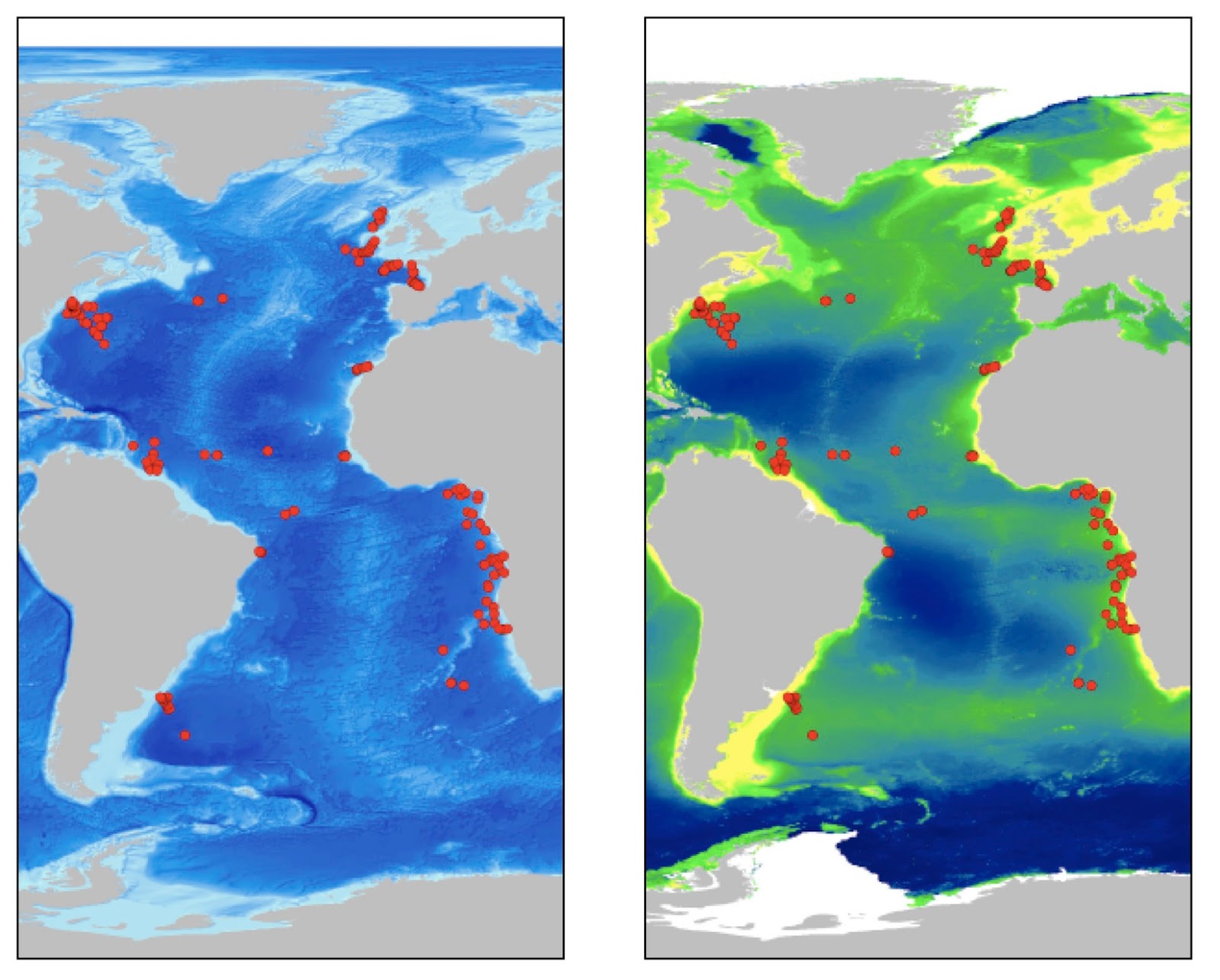
Maps showing the distribution of ocean depths (top left; lighter blues are shallower), marine snow (top right; yellows are higher), and temperature (bottom; redder is greater) in the study regions. The red points show the sampling sites from the third study, while the white are the sampling sites in the second.

These studies are interesting because they show that even in energy poor, physically simple environments there can be great spatial complexity. Indeed, small variations in just a few factors can explain a good deal of the amazing diversity of organisms living in the deep sea. And it's the small differences in the amount of marine snow reaching the seafloor in particular that seems to be most important in determining this diversity.


Cited references:
1 McClain, C., Nekola, J., Kuhnz, L. & Barry, J. Local-scale faunal turnover on the deep Pacific seafloor. Marine Ecology Progress Series 422, 193-200, doi:10.3354/meps08924 (2011).

2 Tittensor, D. P., Rex, M. A., Stuart, C. T., McClain, C. R. & Smith, C. R. Species-energy relationships in deep-sea molluscs. Biology Letters 7, 718-722, doi:10.1098/rsbl.2010.1174 (2011).

3 McClain, C. R., Stegen, J. C. & Hurlbert, A. H. Dispersal, environmental niches and oceanic-scale turnover in deep-sea bivalves. Proceedings of the Royal Society B: Biological Sciences, doi:10.1098/rspb.2011.2166 (2011).