Thursday, March 28, 2013

Are there really plenty of fish in the sea?

ResearchBlogging.orgWe started trying to manage fisheries using science-based principles more than 150 years ago. Today, despite great improvements, we are still struggling to manage fisheries well. Perhaps the greatest missing piece in our understanding is an ability to accurately link the number of spawning adult fish with the number of their offspring that survive to replenish the population. Recognition that individual differences play a role in the dynamics of natural populations promises to greatly improve fisheries management.

A classic example of our inability to effectively manage harvested fish populations is the collapse of the northwest Atlantic cod fishery. Despite being managed using best practices, in 1992 the number of cod had collapsed to less than 1% of the number present in 1977. A moratorium was declared to allow the fishery to recover. It was predicted to rebound within a decade, but twenty years on and cod stocks are still at less than 5% of their previous levels and some authorities suggest the fishery may never fully recover.
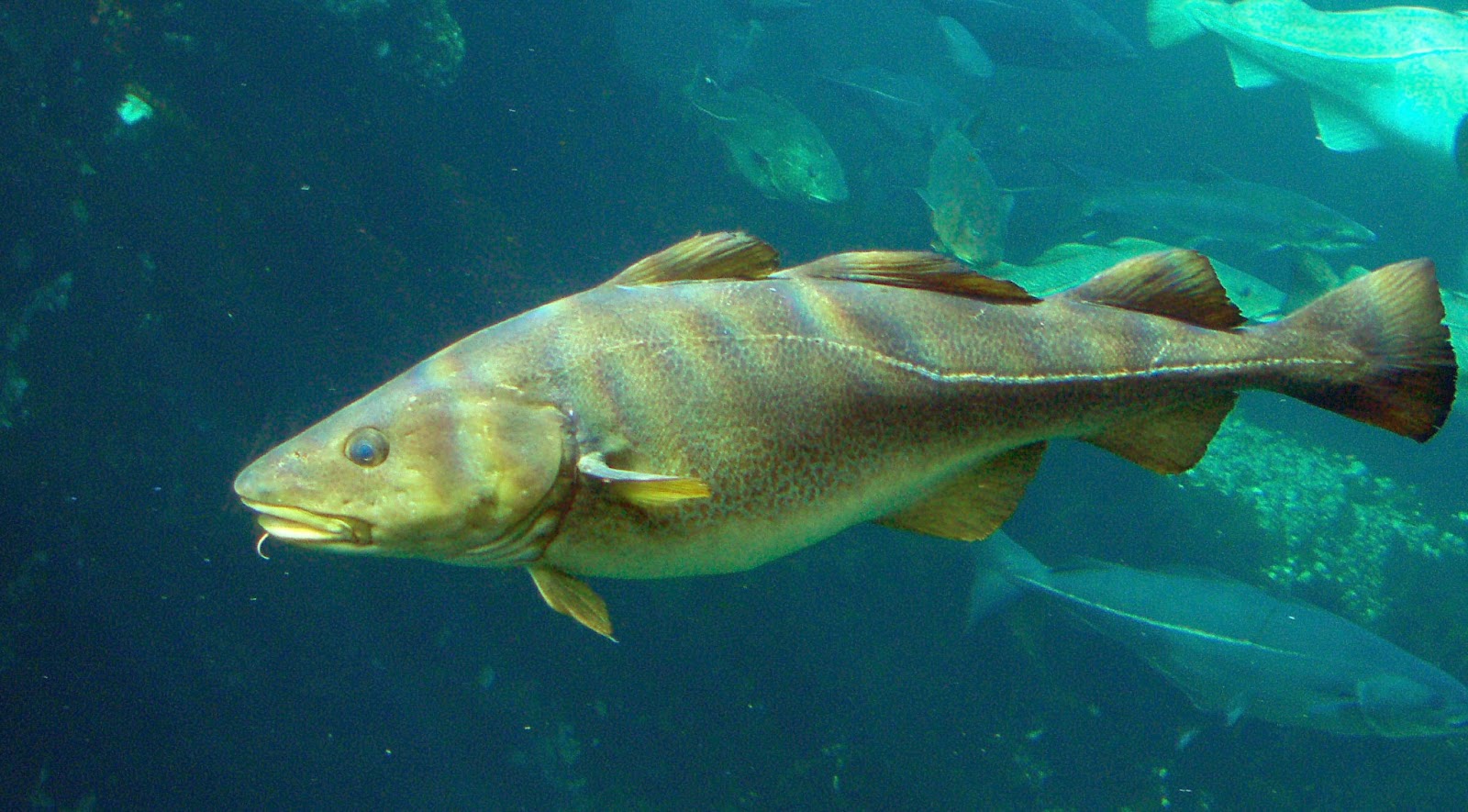

An Atlantic cod, Gadus morhua (photo Wikipedia).
Most fishes are highly fecund, releasing tens to hundreds of thousands or even millions of eggs. Mortality during the early life of fish is incredibly high, often with fewer than one in a thousand surviving the first few days. But, because of the shear number of offspring, small changes in the mortality rate can lead to enormous differences in the number of fish that survive to replenish the population. The great difficulty has been to determine which factors contribute to changes in mortality rate.

Predation and starvation are the two greatest sources of mortality for fish eggs and larvae. Neither of these is random. Bigger, better provisioned eggs are more likely to produce larvae that survive the larval period and replenish the adult population. There are also characteristics of the parents that effect the survival of their offspring, such as when and where they choose to spawn, and how big or old they are.


Predators of fish eggs and larvae are numerous. Jellyfish, like Aurelia aurita, are among them (photo Wikipedia).
Early hypotheses about what regulated survival in the larval period focused on starvation. Hjort's 'critical period' hypothesis (1914) proposed that food resources must be present when larval fish were switching from using their yolk reserves to feeding. Cushing's 'match-mismatch' hypothesis (1975, 1990) recognised that as larvae grow they need progressively larger prey and timing of prey requirement needs to be a match with the timing of prey availability.


Good evidence to support these hypotheses has only emerged recently, with the arrival of technology that can provide long-term measurements over large spatial scales. Platt et al. (2003) combined data from remote-sensing satellites with long-term population surveys of haddock, Melanogrammus aeglefinus. Their data showed that when the peak of spawning occurred after the peak in the spring plankton bloom, survival of larval haddock was much higher.


A haddock, Melanogrammus aeglefinus (photo Wikipedia).
Beaugrand et al. (2003) used data from continuous plankton sampling devices that are opportunistically attached to merchant ships. The devices gave them not only plankton abundance data, but allowed them to measure the size of prey species. Data on cod, Gadus morhua, were obtained from two largely overlapping population surveys. Like Platt et al., they found that the timing of the plankton bloom was important for larval survival, but they also found that the abundance and average size of prey species were important too.

Predation was recognised early on as an important factor influencing the survival of fish larvae. However, research into its effects on fish populations didn't begin in earnest until the 1970's. The research showed that bigger, faster growing larvae were more likely to survive that larval period. Several, subtly different mechanisms were proposed to explain this pattern and are often combined into the 'growth-predation' hypothesis. 

Testing the growth-predation hypothesis in the wild has proved tricky. But, fish have structures in their ears called otoliths that lay down growth rings a bit like the growth rings in a tree. Because the growth rings in otoliths are laid down daily in many fish species they can be used as proxy measurements of size and growth. Several studies have used otoliths to calculate size and growth rates and have universally supported the growth-predation hypothesis (e.g. Hare & Cowen 1997, Meekan et al. 2006).

The otolith of a black rockfish, Sebastes melanops, showing the light and dark bands of yearly growth increments. Smaller daily increments are visible under higher magnifications (photo Vanessa von Biela, USGS).
Mothers are one of the most important influences on the size and growth rate of larval fish, particularly early in life when mortality is highest. The time that mothers spawn determines the match between hatching and the availability of food resources. The amount that mothers invest in their offspring also influences their survival. Bigger eggs typically hatch into bigger larvae that grow faster and are more resistant to starvation Spawning time and investment can depend on the characteristics of mothers.

It's widely documented that larger, older mothers produce more offspring. Fecundity typically increases with the volume of the body cavity, which is roughly proportional to the cube of female length. Berkeley et al. (2004) also showed that larger, older female black rockfish, Sebastes melanops, invested more into their offspring, resulting in faster growing larvae that were more resistant to starvation. 

The blue rockfish, Sebastes mystinus, looks similar to the black rockfish (photo Wikipedia)
The Berkeley et al. paper became frequently cited to make the case that larger, older females needed better protection (e.g. Palumbi 2004, Birkeland & Dayton 2005). Harvesting large females might be much worse for the population because they produce more offspring that have a greater chance of surviving the larval period. Most fisheries remove the larger, older individuals, even when they are not targeted, which might explain why collapsed stocks struggle to recover faster than expected, like the Atlantic cod.

Marshall et al. (2010) argued that it was unjustified to conclude that larger females produce larvae that greater chance of survival. Decades of empirical and theoretical work has shown that the only time mothers should produce larger eggs is when they are releasing offspring into a poorer quality environment. Berkeley et al. tested larvae in common conditions and, therefore, they didn't expose larvae to the conditions that they would have experienced in the wild. 

Larger mothers might provide their offspring with a poorer quality environment in a number of ways. They might expose their offspring to greater competition with their siblings because they release far more larvae. Female size can predict the timing of spawning, and does in the black rockfish, which exposes larvae to different environmental conditions. Therefore, the larger offspring produced by larger mothers might have similar chances of surviving the larval period under natural conditions.

There is some evidence that the decades of theoretical and empirical work might not have captured the whole picture. If all larvae have roughly the same chance of making it through the larval period you would expect that the diversity of surviving larvae would be roughly proportional to the numbers released. Hedgecock et al (2007) estimated that in one cohort of the Pacific oyster, Ostrea edulis, only 10 - 20 individuals produced all of the surviving offspring.


Beldade et al. (2012) conducted a similar study to Hedgecock et al., but they were able to link surviving larvae with adults. They found that larger mothers contributed disproportionally more to the number of larvae that returned to the same population and that greater fecundity alone did not account for the disparity. It's not entirely compelling because it is possible that smaller mothers are producing larvae that preferentially disperse away. It is a tantalizing hint that larger, older mothers really matter more for population replenishment.

Most fisheries models currently do not account for the differences in the survival chances of larvae or the potential differences in the contribution of mothers to the next generation. They treat the survival of all larvae as equally likely, or ignore the larval period altogether. Such models are failing to produce accurate predictions of future stock numbers. Greater understanding of mortality processes in the larval period and the rise of individual based models promise to greatly improve the way fisheries are managed.

References:
Beaugrand, G., Brander, K., Alistair Lindley, J., Souissi, S., & Reid, P. (2003). Plankton effect on cod recruitment in the North Sea. Nature, 426 (6967), 661-664 DOI: 10.1038/nature02164

Beldade, R., Holbrook, S., Schmitt, R., Planes, S., Malone, D., & Bernardi, G. (2012). Larger female fish contribute disproportionately more to self-replenishment. Proceedings of the Royal Society B: Biological Sciences, 279 (1736), 2116-2121 DOI: 10.1098/rspb.2011.2433

Berkeley, S., Chapman, C., & Sogard, S. (2004). Maternal age as a determininant of larval growth and survival in a marine fish, Sebastes melanops. Ecology, 85 (5), 1258-1264 DOI: 10.1890/03-0706

Cushing, D. (1969). The Regularity of the Spawning Season of Some Fishes. ICES Journal of Marine Science, 33 (1), 81-92 DOI: 10.1093/icesjms/33.1.81  

Cushing, D. H. (1990). Plankton production and year-class strength in fish populations - an update of the match mismatch hypothesis. Advances in Marine Biology, 26, 249-293 DOI: 10.1016/S0065-2881(08)60202-3  

Hare, J., & Cowen, R. (1997). Size, Growth, Development, and Survival of the Planktonic Larvae of Pomatomus saltatrix (Pisces: Pomatomidae). Ecology, 78 (8) DOI: 10.2307/2265903

Hedgecock, D., Launey, S., Pudovkin, A., Naciri, Y., Lapègue, S., & Bonhomme, F. (2006). Small effective number of parents (N-b) inferred for a naturally spawned cohort of juvenile European flat oysters Ostrea edulis. Marine Biology, 150 (6), 1173-1182 DOI: 10.1007/s00227-006-0441-y

Hjort, J (1914). Fluctuations in the great fisheries of northern Europe viewed in the light of biological research. Reun. Cons. Int. Explor. Mer, 20, 1-228

Marshall, D., Heppell, S., Munch, S., & Warner, R. (2010). The relationship between maternal phenotype and offspring quality: Do older mothers really produce the best offspring? Ecology, 91 (10), 2862-2873 DOI: 10.1890/09-0156.1   

Meekan, M., Vigliola, L., Hansen, A., Doherty, P., Halford, A., & Carleton, J. (2006). Bigger is better: size-selective mortality throughout the life history of a fast-growing clupeid, Spratelloides gracilis. Marine Ecology Progress Series, 317, 237-244 DOI: 10.3354/meps317237

Platt, T., Fuentes-Yaco, C., & Frank, K. (2003). Spring algal bloom and larval fish survival. Nature, 423 (6938), 398-399 DOI: 10.1038/423398b

Thursday, March 21, 2013

Giant squid have a giant distribution

ResearchBlogging.orgAs many as twenty one species of giant squid have been identified, but most of these were controversial. The general consensus was that there could be one with three subspecies or up to eight distinct species. Now, research shows that there is only one species with no subspecies. This is remarkable given that giant squid are found in nearly every part of the deep sea and their populations are probably large.

Winkelmann et al. (2013) sequenced the mitochondrial genome of 43 giant squid that covered individuals from all of the most widely accepted of the proposed species. They found extremely low genetic diversity and almost no genetic structure between squid from different locations. Only basking sharks, which have long generation times, small population sizes and are recovering from a recently small population size, have lower genetic diversity.

The most likely explanation for the low genetic diversity is that sometime during the last ice-age the population of giant squid declined to a very small size. Small populations are associated with low genetic diversity because random genetic drift affects gene frequency more strongly than it does in large populations. Changes in the numbers of predators or competitors may have caused the decline, but that's just speculation.

The lack of genetic structure is interesting. It suggests that giant squid are incredibly mobile. It is unlikely to be the adults that are moving long distances as other studies show that they stay in relatively contained patches of the deep sea. That argues for long distance dispersal in the eggs and larvae of the giant squid. It is common for marine species to have larvae that disperse long distances, but dispersal distance in the giant squid is extreme.

The study only looked at mitochondrial genes, which are only inherited from the mother. The vast majority of genes are in the nuclear genome and the researchers didn't publish those results in this paper. It will be interesting to see what their results are when they come to analyse them. Sometimes the information gained from looking at the nuclear genes can be at odds with that of the mitochondrial genes because of the differences in the way the genes are inherited.

Winkelmann, I., Campos, P., Strugnell, J., Cherel, Y., Smith, P., Kubodera, T., Allcock, L., Kampmann, M., Schroeder, H., Guerra, A., Norman, M., Finn, J., Ingrao, D., Clarke, M., & Gilbert, M. (2013). Mitochondrial genome diversity and population structure of the giant squid Architeuthis: genetics sheds new light on one of the most enigmatic marine species Proceedings of the Royal Society B: Biological Sciences, 280 (1759), 20130273-20130273 DOI: 10.1098/rspb.2013.0273

Thursday, March 14, 2013

Plastic waste and seabirds

Plastic waste is an important issue for marine conservation. Globally, a greater mass of human waste goes into the ocean than the mass of fish we take out and much of the waste is plastics. And, because plastics breakdown very slowly in the environment they can accumulate in the ocean forming garbage patches

Many animals eat or are entangled by plastic debris, which effects animals from very large things like whales to microscopic crustaceans. Photographs of the plastic filled skeletons of albatross chicks on Midway Atoll have placed seabirds among the most recognised victims of plastic pollution. Jennifer Lavers has an interesting article on The Conversation about the problem of plastic pollution for the flesh-footed shearwater and the failure of the Australian Government to place the it on the threatened species list despite significant population declines.

Sunday, March 10, 2013

Physics versus biology

When I was in high school, my physics teacher drew a massive rectangle that took up almost the entire black board and proclaimed, "this is physics". He then drew a little rectangle inside the first one and proclaimed, "this is biology". The he made a tiny little smudge of chalk on one of the sides of the 'biology' rectangle and said, "this is chemistry, so you all should study physics because all the other major division of science are just sub-disciplines of physics".

Amusing as his performance was, there are many aspects of biology that cannot be directly or indirectly inferred from our understanding of physics. Notably, we would have never formulated the theory of evolution, which underpins our modern understanding of biology, if we had to rely on progress in physics alone. Clearly though, physics is important in shaping the evolution of particular traits. I've written many times about physics in biology, such as swimming in sharks (here), flight in albatross (here), the hammer strike of mantis shrimp (here) and the visual capability of giant and colossal squid (here and revisited here).

Almost all organisms that detect and use light do so in the same part of the spectrum, which is pretty much the same part of the spectrum we see in. Although many use slightly shorter wavelengths in the ultraviolet or slighter longer wavelengths in the infrared, no organisms that we know of use the huge parts of the spectrum in the radio, x-ray and gamma ray wavelengths. I've wondered why this is before, but Mathew Cobb wondered it out loud and got some interesting answers.

Saturday, March 9, 2013

It's allometric, my dear Watson

ResearchBlogging.orgGiant and colossal squid have the largest eyes of any living animals. Eyes are expensive organs to build and maintain, which led some researchers to suggest that there must be a strong evolutionary advantage for large eyes in giant squid. Using a mathematical model they found that giant squid eyes were best suited for detecting large dimly lit objects. They argued that the only stimulus that was both large enough and important enough for giant and colossal squid to detect was the light produced by bioluminescent organisms disturbed by hunting sperm whales.

A giant squid, Architeuthis dux (top), and a colossal squid, Mesonychoteuthis hamiltoni (bottom), being hauled up from the depths (images from National Geographic here and here respectively).
When I wrote about the paper, one of the criticisms I had was that the authors had failed to consider allometric scaling. Although the authors made comparisons of eye size with fish and extinct marine reptiles of similar size, they had not looked at eye size in other squid. Giant and colossal squid are the largest of all squid and their eyes could simply be large because they scaled up with their body size. I did a very crude analysis by conducting a literature search for papers that reported both eye size and body size in squid. From that I concluded that eye size was not disproportionately large relative to body size in giant and colossal squid.

Now, fortunately, nobody needs to rely on my poor-man's analysis. Schmitz et al. have published in BMC Evolutionary Biology that examines data from 87 different squid species and concludes that when allometric scaling is taken into account eye size in giant and colossal squids is not exceptional. In fact, it's pretty much exactly what you would expect if you scaled up another squid species to the same size. Indeed, there were a couple of groups, such as the bobtail squid, that had larger eyes relative to body size than the giant squid.

A regression of eye diameter on mantle length for 87 species of squid. Points for individual measurements in giant (yellow) and colossal (red) squid are shown for comparison (taken from Schmitz et al. 2013).
Further, Schmitz et al. also argue that many of the parameter values used in the original study are inappropriate. The original study based all of their optical performance calculations on the largest recorded giant squid eye diameter of 27 centimeters. But, this is problematic because the optical ability of such a large eye is likely to apply mainly to very large old squid, who are likely to have already reproduced. Eyes that only provide an advantage late in life are unlikely to contribute much to individual fitness. The original paper also probably set the values for the density and amount of light emitted from bioluminescent organisms in the deep sea too high.

When Schmitz et al. used more realistic values in the model they found that there was no unique advantage of large eyes for detecting large luminous objects, such as foraging sperm whales. Pupil sizes ranging from 2 centimeters up to the 15 centimeters used in the original model performed roughly equally well at detecting point sources and large luminous objects. Moreover, as eye size increased there was a slightly greater advantage for detecting point sources of light rather than large luminous objects. Thus, with more realistic parameter values, the conclusions of the original paper are essentially reversed.

References

Schmitz, L., Motani, R., Oufiero, C., Martin, C., McGee, M., Gamarra, A., Lee, J., & Wainwright, P. (2013). Allometry indicates giant eyes of giant squid are not exceptional BMC Evolutionary Biology, 13 (1) DOI: 10.1186/1471-2148-13-45  

Nilsson, D., Warrant, E., Johnsen, S., Hanlon, R., & Shashar, N. (2012). A Unique Advantage for Giant Eyes in Giant Squid Current Biology, 22 (8), 683-688 DOI: 10.1016/j.cub.2012.02.031

Tuesday, February 26, 2013

Fish get wasted on wastewater

ResearchBlogging.orgIn most cities sewage is treated to remove most of the things that we don't want going into the environment. But, some things get through and out to sea. The Western Treatment Plant in Melbourne, which treats over 50% of Melbourne's wastewater (including my contribution), releases large amounts of nitrogen into Port Phillip Bay. Indeed, a 1996 report from the Commonwealth Scientific and Industrial Research Organisation recommended that nitrogen released from the Western Treatment Plant be reduced by 1000 tonnes per year. Nearly 20 years later they've achieved half that amount.


The Western Treatment Plant. Covering 10,500 hectares it treats about 50% of Melbourne's wastewater.
Nitrogen pollution is significant issue. It, along with other types of nutrient pollution, has been linked to coral and seagrass declines, and jellyfish blooms. Other things that cause problems in the ocean also slip through sewage treatments plants. From the relatively large things, like plastic fibers from clothing, to the very small, like the drugs we take.


Not all drugs remain active after they've done their job in the human body, but many do. One of the best known and most researched drugs to escape sewage treatment is ethinyl oestradiol, the active ingredient in birth control pills. Decades of research has shown that ethinyl oestradiol has negative impacts on fish and other aquatic organisms. Even very small doses can lead to male fish that produce eggs in their testes, leading to reduced fertility and potentially to population collapse (Kidd et al. 2007).

Sections through the testis of two male fish showing developing eggs, which are the large circular cells surrounded by purple staining tissue. The smaller purple staining flecks are the sperm cells.
Many recreational drugs also make it through wastewater treatment, such as illicit  amphetamines (Kasprzyk-Hordern et al. 2009). To my knowledge, it has not been shown that these arrive in the environment at high enough doses to cause any negative effects. Caffeine, my favorite recreational drug, is detected in seawater at concentrations high enough to produce measurable, but probably minor effects in mussels (del Rey et al. 2011, 2012).

Exposure to the concentrations of caffeine that are normally found in the environment probably have little or no effect on fish. Unlike caffeine, some drugs can build up in the body tissues of fish, making chronic exposure to even low concentrations a risk. Recently a study found that the concentration of a common anti-anxiety medication, oxazepam, was six times higher in the muscle of redfin perch (Perca fluviatilis) than it was in the surrounding river water (Brodin et al. 2013).

A redfin perch, Perca fluviatilis, in an aquarium (photo Wikipedia)
Interestingly, Brodin et al. went on to test what effects oxazepam had on the redfin perch. Annoyingly, they used concentrations of the drug that were three times higher than they recorded in the river and higher than other studies have documented. But, their treatments produced levels of the drug in the muscle tissue of the fish that were comparable to the fish in the river, indicating their results are probably biologically relevant. They found that the fish exposed to the drug exhibited increased activity, reduced sociality, and higher feeding rate relative to control fish.

Although they scuffed their experiment a little with their choice of concentrations, they did do something that few other ecotoxicology studies do. They looked at behavioural traits that are important for the survival of fish in the wild. Too slowly are excotoxicologists moving away from testing the lethal effects of pollutants, often requiring doses that never occur in the wild. Hopefully, the publication of the Brodin et al. paper in the prestigious journal Science will encourage more researchers to examine the effects of pollutants at the levels which they typically occur and on a greater range biologically interesting traits.

References:

Kidd, K., Blanchfield, P., Mills, K., Palace, V., Evans, R., Lazorchak, J., & Flick, R. (2007). Collapse of a fish population after exposure to a synthetic estrogen Proceedings of the National Academy of Sciences, 104 (21), 8897-8901 DOI: 10.1073/pnas.0609568104  

Kasprzyk-Hordern, B., Dinsdale, R., & Guwy, A. (2009). The removal of pharmaceuticals, personal care products, endocrine disruptors and illicit drugs during wastewater treatment and its impact on the quality of receiving waters Water Research, 43 (2), 363-380 DOI: 10.1016/j.watres.2008.10.047  

Rey, Z., Granek, E., & Buckley, B. (2011). Expression of HSP70 in Mytilus californianus following exposure to caffeine Ecotoxicology, 20 (4), 855-861 DOI: 10.1007/s10646-011-0649-6  

Rodriguez del Rey, Z., Granek, E., & Sylvester, S. (2012). Occurrence and concentration of caffeine in Oregon coastal waters Marine Pollution Bulletin, 64 (7), 1417-1424 DOI: 10.1016/j.marpolbul.2012.04.015  

Brodin, T., Fick, J., Jonsson, M., & Klaminder, J. (2013). Dilute Concentrations of a Psychiatric Drug Alter Behavior of Fish from Natural Populations Science, 339 (6121), 814-815 DOI: 10.1126/science.1226850

Friday, February 22, 2013

Seaweek!

Seaweek is coming up fast. It's organised by the Marine Education Society of Australia and running from the 2nd to the 10th of March. I've been invited to participate in a day of activities at Rickets Point Marine Sanctuary on the 7th. I'll be talking to primary and high school students about marine introduced species. The day will bring together marine experts from MESA, Parks Victoria, Melbourne Aquarium, Monash University, the Earth Watch Institute, the Ocean Ark Alliance, the Gould League, Marine Care Ricketts Point, Pelican Expeditions, Nautilus Educational and the Australian Youth Climate Coalition (and me, who is not from any of those organisations).

The theme for Seaweek 13 is ‘Sustainable Seas’. The theme provides a focus for students in schools and for communities to inform and inspire them about the diversity of our marine and coastal environments and how, through good management and individual action, we can all contribute towards the sustainability of these environments.


Aims

  • Highlight the sustainable management of Australia’s marine environment;
  • Identify factors that threaten the sustainability of marine and coastal ecosystems;
  • Facilitate the communication of sustainable marine management projects to the education community;
  • Initiate interest and actions for supporting sustainable marine management that help us learn more about and contribute towards the sustainability of our marine and coastal environments; and
  • Provide schools with educational resources available on the MESA website for school’s classroom based activities.
Find out more about Seaweek here.

Thursday, February 21, 2013

The anti-science, anti-environment Victorian Government

The Victorian Government is at it again. They've allowed a "scientific trial" of cattle grazing in Victoria's Alpine National Park against all scientific advice (why conduct a trial when you've already got a robust answer?). They've provided funding to find the Victorian panther, the Australian version of Bigfoot. They've decided to allow private tourist developments in National Parks, when the best thing that National Parks do for the environment is to limit access to people. Now they've decided to redraw the boundaries of the Alpine National Park to allow business at the Falls Creek ski resort to expand. You'd probably be surprised to know that the Victorian Premier is a former director of a real estate company...

Sunday, February 17, 2013

Flying squid really fly

ResearchBlogging.orgMany pelagic squid are able to launch themselves into the air using jets of water expelled through a funnel beneath their head. There are a number of photos online that show squid out of the water and holding their fins and tentacles in a gliding position. But it has been unclear whether the squid where using simple gliding, like a paper plane, or actively controlling the flight.

The neon flying squid, Ommastrephes bartramii, holding its fins and tentacles for flight (photo Geoff Jones).
Now researchers have taken photographic sequences for two schools of the neon flying squid, Ommastrephes bartramii, in flight. The sequences captured the entire flight process, from exiting the water to reentry. Their analysis of the photographs provides the first compelling evidence that flying squid are performing true biomechanical flight.

Neon flying squid in flight with a red footed booby looking on (photo from Muramatsu et al. 2013)
The researchers identified four phases of the flight; launching, jetting, gliding and diving. During the launch phase the squid's fins and tentacles are held in a streamlined position and the squid propels itself out of the water. The squid then spreads its fins and tentacles jetting through the air. Once the water within the mantle cavity is expended the squid continues to glide. Finally, the squid folds its fins and tentacles back into a streamlined position, changes is pitch and dives into the water with barely a splash.

The phases of squid flight; a) launching, b) jetting, c) gliding and d) diving (from Muramatsu et al. 2013)
Using birds within some images the researchers were able to estimate the length of the airborne squid and therefore their speed and distance covered. During the jetting phase the squid travelled at between 8.8 and 11.2 meters per second, which is about human sprinting speed. The squid covered up to 33.5 meters in flight, substantially less than a flying fish (~400 meters***), but better than previous estimates for flying squid (~10 meters).

*** Correction - While flying fish have been documented to travel over 400 meters in a single jump, their typical jumps are about 50 meters.

Muramatsu, K., Yamamoto, J., Abe, T., Sekiguchi, K., Hoshi, N., & Sakurai, Y. (2013). Oceanic squid do fly Marine Biology DOI: 10.1007/s00227-013-2169-9

Saturday, February 16, 2013

A stepping stone of rotting wood

ResearchBlogging.orgMany of the animals living at hydrothermal vents and cold seeps carry chemosynthetic bacterial symbionts in their body, which convert methane or hydrogen sulfide into food. Some have lost the ability to feed on anything other than what the bacteria living inside their tissues provide them. Almost all cannot survive without a sufficient supply of methane or hydrogen sulfide. One hypothesis is that decomposing organic matter that has sunk from the surface, like whale carcasses, seaweed, and wood could serve as a food source, providing stepping stones between vents or seeps.

A field of mussels at a cold seep (photo Wikipedia)
Animals more typically found at vents and seeps are known to colonise the remains of whales in the deep sea. Smith et al. (1989), were the first to report vent animals colonising whale skeletons. They also provided a conservative estimate of the distribution of whale carcasses on the ocean floor and suggested that they would provide a persistent and abundant habitat for cold seep and hydrothermal vent animals. Adding sunken wood and seaweed to the list only increases the amount of available habitat.

A whale skeleton in the deep sea with patrolling hagfish (photo Wikipedia)
A gap in our understanding, though, is how enough methane or hydrogen sulfide is produced to support populations of chemosynthetic animals by decaying wood. The deep sea is a cold place, which is not conducive to the rapid breakdown of organic material. A large amount of wood would be required to provide the surface area necessary to produce enough gas. One hypothesis though, is that the surface area of wood might be increased by larger organisms, such as wood-boring bivalves, breaking it up first.

Researchers tested this idea by depositing wood logs on the Eastern Mediterranean seafloor at 1700 meters down and returned a year later to examine the animals and bacteria the had colonised the wood. They also measured the chemicals in the water released by the bacteria breaking down the wood. Using underwater robots, they observed that wood-boring bivalves had indeed broken the wood into smaller pieces, which were further broken down by other organisms. 

The activity of the organisms digesting the wood reduced the amount of dissolved oxygen, resulting in anoxic conditions that allowed sulfate-reducing bacteria to move in and produce hydrogen sulfide. The hydrogen sulfide then attracted a species of mussel, which usually found at cold seeps where it gains energy from symbiotic chemosynthetic bacteria. The mussels seemed to preferentially colonise cavities under the bark of the wood, presumably because sulfide levels were higher there.

The chemosynthetic mussel Idas modiolaeformis was found in the sunken wood piles (photo from Bienhold et al. 2013)
So it appears that wood boring organisms are able to pave the way for chemosynthetic organisms to colonise sunken wood in the deep sea. Their burrows, feces and the chips of wood that they produce all increase the surface area of material available for hydrogen sulfide producing bacteria to digest. Moreover, their activity and the activity of other organisms produce the anoxic conditions required for sulfate reduction, which is necessary to support chemosynthetic life.


A hypothetical succession of animals on submerged wood in the deep sea over a year. Initially wood-boring bivalves move in, followed by predators and detritus feeders (e.g. polychaetes and sipunculids). The respiration of the colonisers creates anoxic niches that allow the chemosynthetic mussels to move in (diagram from Bienhold et al. 2013).

Smith, C., Kukert, H., Wheatcroft, R., Jumars, P., & Deming, J. (1989). Vent fauna on whale remains Nature, 341 (6237), 27-28 DOI: 10.1038/341027a0  

Bienhold, C., Pop Ristova, P., Wenzhöfer, F., Dittmar, T., & Boetius, A. (2013). How Deep-Sea Wood Falls Sustain Chemosynthetic Life PLoS ONE, 8 (1) DOI: 10.1371/journal.pone.0053590